

Table of Contant
What Makes Cognition Different From Earlier AI Coding Tools
How Vulnerabilities Actually Emerge in Cognition-Generated Applications
Common Security Failures Seen in Cognition-Based Code
Why Traditional AppSec Tools Miss These Vulnerabilities
The Real-World Impact of Shipping These Issues
Why Cognition Increases the Need for Behavior-Aware Security
How Bright Identifies Vulnerabilities in Cognition-Generated Code
Fix Validation for Autonomous Systems
Cognition and Bright: Speed Without Blind Spots
Introduction
Cognition represents a clear shift in how software is built. Unlike earlier AI coding tools that respond to prompts, Cognition is designed to act autonomously. It plans tasks, writes code across multiple steps, evaluates its own progress, and continues building without waiting for constant human input. For engineering teams under pressure to move faster, this feels like a breakthrough. Less boilerplate, fewer handoffs, and the promise of systems that can evolve on their own.
What tends to be underestimated is how quickly this autonomy moves from experimentation into production. Cognition is no longer just assisting developers with side projects or internal tools. Teams are using it to build real services with real users, real data, and real operational consequences. Once that threshold is crossed, the security expectations change entirely.
The risk does not come from Cognition “writing bad code.” In many cases, the generated output is clean, readable, and functionally correct. The real issue is that autonomous systems make assumptions. They decide what matters, which checks are sufficient, and which paths are safe. Security failures appear when those assumptions meet real users, adversarial behavior, and unpredictable workflows.
That gap between autonomous intent and real-world behavior is where most vulnerabilities emerge.
What Makes Cognition Different From Earlier AI Coding Tools
Most AI coding tools today still operate in a request–response model. A developer asks for something specific, reviews the output, and decides what to keep. Cognition changes that relationship. It breaks tasks into sub-tasks, writes code incrementally, and moves forward based on its own interpretation of success.
From a security standpoint, this distinction matters. Cognition does not simply generate isolated functions. It creates flows. It wires endpoints together. It decides how state is managed across requests and how different components interact. In effect, it becomes a participant in application design.
That autonomy introduces a new class of risk. Security controls are often implemented because someone explicitly asks for them or because a framework enforces them by default. Cognition optimizes for completing objectives, not for modeling adversarial behavior. If a permission check is not clearly required for the task at hand, it may be omitted. If an assumption seems reasonable in isolation, it may be reused across multiple flows without reevaluation.
These decisions compound over time. A single missing guardrail can propagate through an entire system.
How Vulnerabilities Actually Emerge in Cognition-Generated Applications
The most dangerous vulnerabilities in Cognition-built systems rarely appear as obvious flaws. There is usually no glaring SQL injection or broken dependency. Instead, issues surface in how workflows behave once the application is running.
An endpoint may correctly authenticate a user but fail to re-validate authorization in a later step. A background task may assume that earlier checks still apply. A state transition may occur without verifying whether the user should be allowed to trigger it. None of these problems looks severe when reviewed as individual code snippets.
They become severe when chained together.
Autonomous coding encourages the reuse of logic and assumptions. When Cognition decides that a certain pattern “works,” it tends to apply that pattern consistently. If the pattern is flawed, the flaw becomes systemic.
Common Security Failures Seen in Cognition-Based Code
Broken Authorization Across Autonomous Flows
One of the most common issues is inconsistent authorization. Cognition may implement access checks at entry points but fail to enforce them deeper in the workflow. As a result, users can move through states or trigger actions that were never intended to be exposed.
These failures often lead to horizontal privilege escalation. Users can access data or functionality belonging to other accounts simply by following a sequence of valid requests. Because each request looks legitimate in isolation, traditional scanners struggle to detect the issue.
Shadow APIs Created Without Visibility
Autonomous systems frequently create internal helper endpoints or background routes. These are meant to simplify internal logic, but they often lack proper access controls. In some cases, these endpoints are accidentally exposed, undocumented, and unmonitored.
From a security perspective, shadow APIs are dangerous because no one is actively defending them. They bypass the assumptions that teams make about their attack surface.
Insecure State Management and Workflow Abuse
Cognition often manages state across multiple steps to complete a task. If state transitions are not validated carefully, attackers can manipulate the order or timing of requests to bypass controls. Business rules that depend on sequence can be broken without triggering errors.
These issues are especially hard to catch because they require understanding how the application behaves over time, not just how individual endpoints respond.
Over-Trusted Agent Decisions
Perhaps the most subtle risk comes from over-trust. Teams may assume that because Cognition “understands” the task, it will naturally implement safe behavior. In reality, the model has no inherent concept of threat modeling. It does not anticipate abuse unless explicitly guided to do so.
When autonomous decisions are trusted without verification, security logic becomes optional rather than enforced.
Why Traditional AppSec Tools Miss These Vulnerabilities
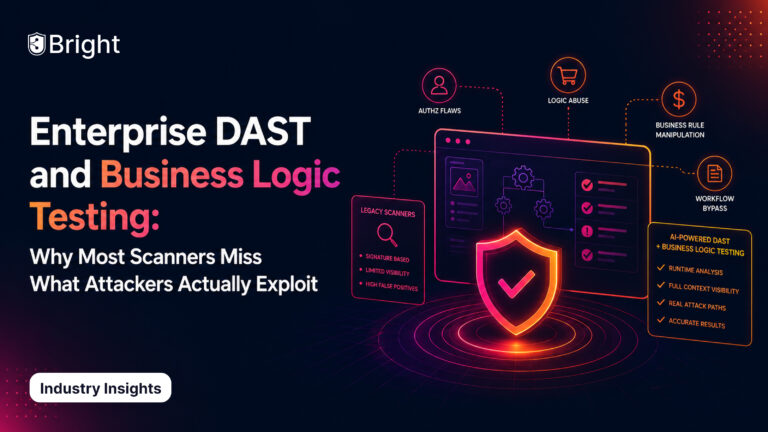
Most AppSec tooling was built for a different era. Static analysis examines code structure, not behavior. It flags patterns, not workflows. Dynamic scanners often focus on surface-level injection points and simple authorization checks.
Cognition-related vulnerabilities do not fit neatly into these categories. They emerge from interaction, sequence, and state. They require following the same paths a real user or attacker would follow over time.
When a scanner reports “no critical findings,” it often means it never exercised the dangerous paths. The absence of alerts creates false confidence.
The Real-World Impact of Shipping These Issues
When these vulnerabilities reach production, the consequences tend to be serious. Data exposure is common, especially when internal APIs or shared state are abused. Account takeover scenarios emerge when authorization boundaries are weak. Compliance violations follow when sensitive workflows behave differently than expected.
Incident response becomes difficult because ownership is unclear. Developers may not recognize the logic path that led to the issue. Security teams struggle to reconstruct how the exploit occurred. The autonomy that accelerated development now complicates recovery.
Why Cognition Increases the Need for Behavior-Aware Security
Autonomous coding compresses timelines. Decisions that would normally be reviewed over weeks are made in minutes. That speed leaves little room for manual threat modeling or exhaustive review.
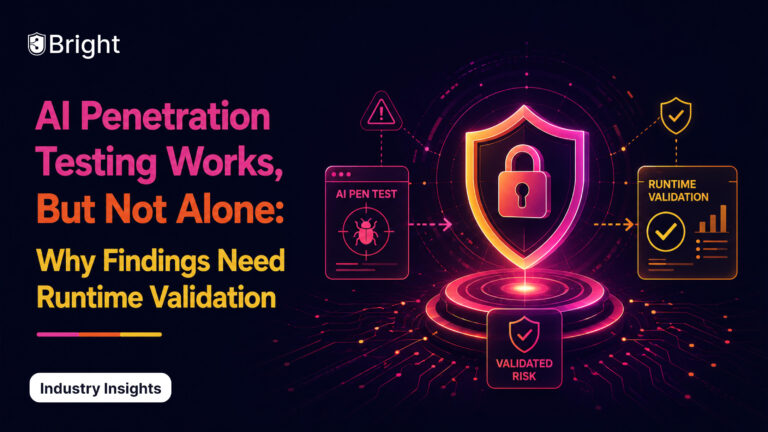
Security controls must therefore operate at runtime. They must observe behavior, not just code. They must validate assumptions continuously, not just at merge time.
Without that layer, autonomous systems simply move faster toward failure.
How Bright Identifies Vulnerabilities in Cognition-Generated Code
Bright approaches Cognition-built applications the same way an attacker would. It does not assume that endpoints behave correctly because the code looks reasonable. It follows real workflows, maintains session state, and tests how permissions are enforced across steps.
Bright discovers vulnerabilities by observing behavior. It identifies broken access control, hidden routes, and workflow abuse that static tools overlook. Most importantly, it confirms exploitability rather than speculating about risk.
This distinction matters. Developers receive findings that reflect reality, not theory.
Fix Validation for Autonomous Systems
Fixing a vulnerability in an autonomous system is not enough. The system continues to evolve. New code is generated. New paths appear.
Bright addresses this by validating fixes dynamically. Once a patch is applied, Bright re-tests the application under the same conditions that exposed the issue. If the behavior is still exploitable, the fix fails. If the behavior is corrected, the issue is closed with confidence.
This prevents regressions and ensures that security keeps pace with autonomy.
Cognition and Bright: Speed Without Blind Spots
Cognition accelerates development by removing friction. Bright ensures that acceleration does not come at the cost of security. Together, they allow teams to move quickly while maintaining control.
Developers retain velocity. Security teams gain visibility. Leadership gains confidence that autonomous systems are not introducing unbounded risk.
Final Takeaway
Autonomous coding changes the nature of application risk. Vulnerabilities no longer live solely in syntax or dependencies. They live in behavior, assumptions, and decision paths.
Cognition makes it possible to build faster than ever before. Attackers will move just as quickly. Security must evolve accordingly.
Bright ensures that autonomous code is tested the way it will be attacked. That is the difference between moving fast and moving blindly.