
Table Of Contents
- Introduction – The AI Pentesting Boom Is Real
- Why AI Penetration Testing Has Become Essential
- What AI Pentesting Does Exceptionally Well
- The Gap: Findings Are Not the Same as Verified Risk
- The Hidden Cost of Acting on Noise
- Runtime Exploit Validation – What Actually Closes the Gap
- From Finding to Verified, Fixable Result
- How Bright STAR Makes AI Pentesting Enterprise-Ready
- FAQ
- Conclusion – Adopt AI Pentesting, But Validate Everything
Introduction – The AI Pentesting Boom Is Real
It was just a matter of time before the concept of an independent AI agent identifying vulnerabilities like an experienced pentester appeared to be impossible. This notion is no longer out of reach today.
AI-based security solutions are mapping out attacks, studying application behavior, and even participating in public bug bounties. An experimental attempt has become a reality very quickly and has entered the world of enterprise security. Those who doubted that AI technology could make any meaningful contribution to pentesting are now considering which platform to pick up.
Traditional methods cannot cope with the speed of today’s applications. Teams are deploying dozens of times a day, APIs are changing at all times, and vulnerabilities are used as weapons as soon as they are discovered. There’s just no way for security teams to keep up using only annual pen-tests and assessments.
AI-powered penetration testing addresses a problem that exists in reality.
It increases coverage, provides more flexibility, and allows companies to find threats faster than with traditional solutions.
But there is one thing that many companies realize when they implement the solution.
Finding a vulnerability does not always mean exploiting it.
This distinction becomes one of the most important discussions in modern application security.
And the companies that manage to make the most out of AI pentesting are doing that by complementing the process with the classic exploitation validation.
Why AI Penetration Testing Has Become Essential
Security teams for applications are encountering a scaling issue.
Today’s enterprises have hundreds to thousands of applications, APIs, microservices, and cloud-native services under their management. Each release cycle introduces some new functionalities and dependencies. Potentially, there are some new attack surfaces.
Penetration testing remains highly relevant, but it is not meant to cope with rapidly changing environments.
Penetration testing with AI solves this issue by providing automated discovery and analysis capabilities. Rather than relying on scheduled penetration tests, organizations can test their applications all the time when they are being developed and improved.
The reason is that hackers don’t wait for quarterly assessments.
Upon the publication of any vulnerability, threat actors start scanning for vulnerable targets right away. Security teams require testing capabilities that allow doing the same thing.
AI penetration testing tools do so by performing continuous application analysis and revealing the possible attack vectors faster than any manual techniques would do.
What AI Pentesting Does Exceptionally Well
AI pentesting brings several advantages that security teams should absolutely embrace.
First, it dramatically improves coverage. An AI agent can evaluate far more applications, APIs, and endpoints than a human tester can realistically assess within the same timeframe.
Second, it excels at identifying patterns across large environments. Security issues that may appear unrelated when viewed individually often become obvious when analyzed at scale.
Third, AI enables continuous testing. Traditional pentests provide a snapshot in time. AI-powered assessments can run continuously as applications change.
These capabilities make AI pentesting an important evolution in AppSec. The challenge isn’t whether AI should be used. The challenge is whether organizations can trust every finding it produces.
The Gap: Findings Are Not the Same as Verified Risk
This is where many security programs encounter friction.
AI systems are extremely good at identifying patterns that suggest vulnerabilities may exist. They’re far less reliable when determining whether those vulnerabilities can actually be exploited in a real-world environment.
A finding may look convincing in a report. It may even include a detailed explanation of the attack path.
That doesn’t necessarily mean an attacker can exploit it.
The reason is simple. Most AI systems optimize for probability and reasoning. They generate conclusions based on patterns and likelihoods.
Applications don’t operate on probability. Applications operate on runtime behavior.
A vulnerability may appear reachable during static analysis but be blocked by runtime controls. An exploit path may seem valid but fail because of application logic. Authentication mechanisms, access controls, business workflows, and environmental factors can all influence whether a vulnerability is truly exploitable.
This is one reason false positive rates remain a major concern across many AI-driven security tools.
Without a validation layer, organizations often find themselves investigating findings that never represented real risk in the first place.
The Hidden Cost of Acting on Noise
False positives create more damage than most security metrics reveal.
Every questionable finding generates work.
Security analysts review reports. Developers investigate code. Engineering teams create tickets. Meetings are scheduled to determine priority.
Then someone eventually discovers the issue wasn’t exploitable. That process may consume hours or days of effort for a single finding.
Now multiply that across hundreds of applications and thousands of findings. The operational cost becomes significant. Beyond wasted effort, excessive noise creates a second problem: trust.
When developers repeatedly encounter findings that cannot be reproduced, confidence in security tooling begins to decline. Security teams spend more time defending findings than reducing risk.
The result is slower remediation, larger backlogs, and reduced security effectiveness.
Runtime Exploit Validation – What Actually Closes the Gap
This is where runtime exploit validation changes the equation.
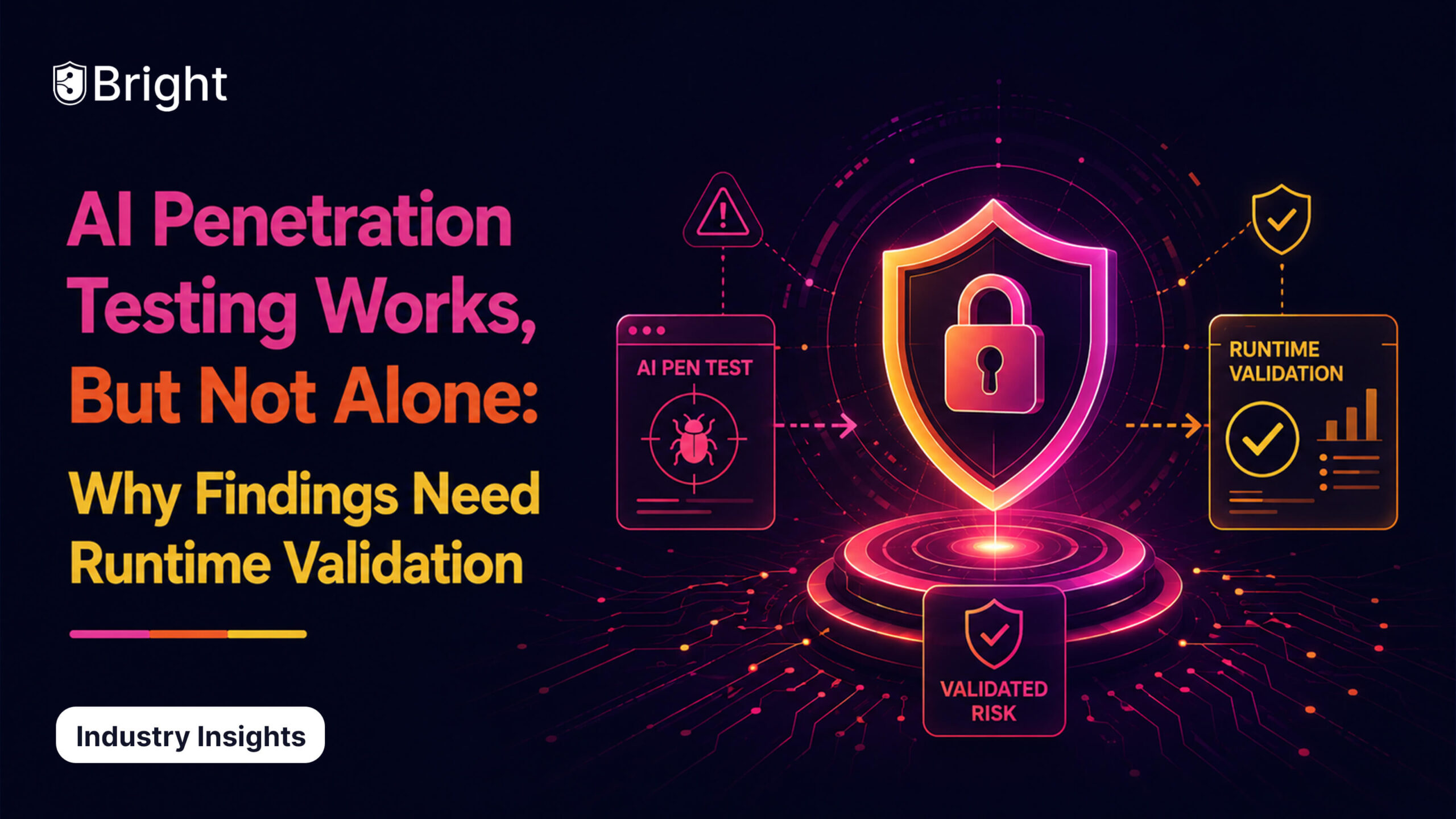
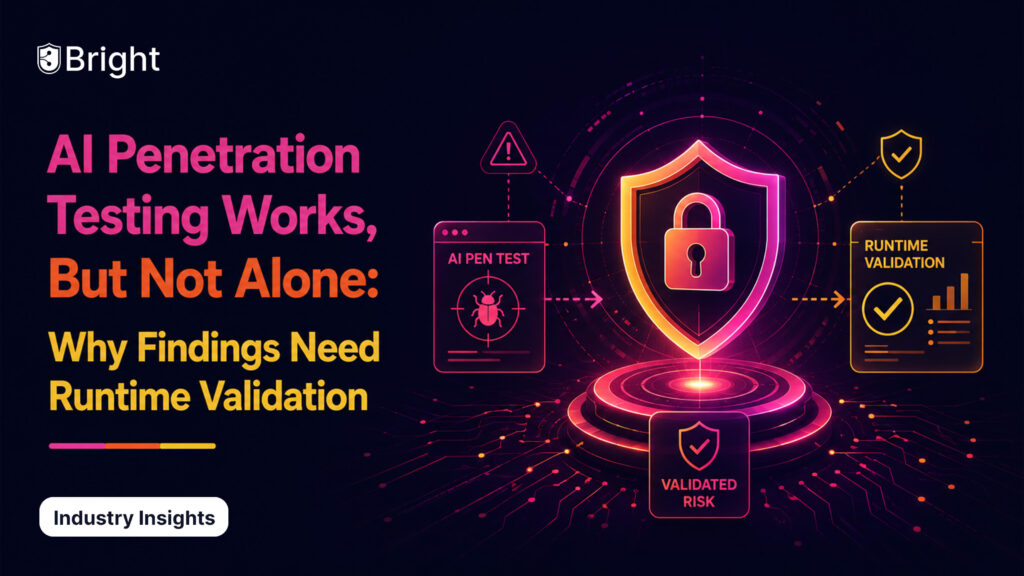
Rather than assuming a vulnerability exists because an AI model believes it does, runtime validation proves whether exploitation is actually possible.
Think of it as grounding AI analysis in real-world application behavior.
Instead of stopping at discovery, the validation process actively tests exploitability within the running application environment. It confirms reachability, verifies execution paths, and eliminates findings that cannot be reproduced under real conditions.
This dramatically changes the quality of security results. A validated finding is no longer a theory. It becomes evidence.
Organizations that implement a combination of artificial intelligence penetration testing and run-time exploit verification tend to have much lower rates of false positives compared to organizations using only artificial intelligence-derived results. Furthermore, security professionals are assured of the business value of any vulnerabilities that they focus on.
That is the difference between alerting and creating security results.
From Finding to Verified, Fixable Result
The most effective AppSec programs don’t stop at detection.
They follow a complete workflow. AI discovers a potential vulnerability. Runtime testing validates exploitability. Remediation guidance helps developers fix the issue. Validation confirms the fix works.
This creates a closed-loop security process that focuses engineering effort where it matters most.
For modern development teams, that’s far more valuable than another list of theoretical risks.
How Bright STAR Makes AI Pentesting Enterprise-Ready
Bright STAR was designed around a simple observation: enterprises don’t need more findings. They need more confidence.
Most organizations already have security tools capable of generating alerts. The challenge is determining which findings are real, which deserve immediate attention, and whether remediation efforts actually work.
Bright STAR combines AI-powered analysis with Bright’s deterministic runtime testing engine to solve this problem.
Instead of relying solely on AI-generated conclusions, STAR continuously validates findings against real application behavior. This helps eliminate noise and ensures security teams focus on vulnerabilities that can genuinely be exploited.
The platform goes beyond discovery.
Bright STAR helps organizations identify vulnerabilities, generate remediation guidance, validate fixes, and maintain evidence that supports compliance initiatives.
The result is a dramatically different security workflow.
Instead of spending weeks investigating findings and coordinating remediation efforts, teams can move from discovery to validated remediation in minutes.
For enterprises managing large application portfolios, that translates into faster remediation cycles, stronger security outcomes, and significantly greater confidence in the results.
Because ultimately, the goal isn’t finding vulnerabilities.
The goal is to reduce risk.
FAQ
Is AI penetration testing accurate enough to base conclusions on?
Yes, but the accuracy highly depends on validation. AI is tremendously efficient at detecting possible attack vectors and security holes. However, companies must validate their discoveries during runtime testing to understand the extent to which these vulnerabilities can be exploited.
What is runtime exploit validation, and why is it important?
Runtime exploit validation helps determine whether the vulnerability can be used to exploit a live application. It reduces the number of false positive discoveries and helps focus on real threats.
How to reduce false positives when using AI for security?
The best way is to combine AI-based discovery with deterministic runtime exploit validation, which will help companies confirm their exploitability instead of just trusting AI.
Can AI pentesting substitute manual penetration testing in enterprises?
AI pentesting definitely substitutes traditional methods of penetration testing as it increases coverage and frequency. However, there are areas where only manual penetration testing is helpful, such as business logic assessment and others.
Conclusion – Adopt AI Pentesting, But Validate Everything
AI penetration testing is not a passing trend.
It’s becoming a core component of modern application security programs because it solves a real problem: scale.
Organizations can test more applications, identify more risks, and respond faster than ever before.
But discovery alone is not enough.
The difference between a useful finding and an expensive distraction is validation.
Enterprises that pair AI pentesting with runtime exploit validation gain something far more valuable than additional alerts: confidence.
Confidence that findings represent real risk. Confidence that remediation efforts are working. And confidence that security investments are producing measurable results. The future of application security isn’t AI alone. It’s AI backed by proof.