Table of Content
- The First Way of DevOps
- Below I will offer suggestions for how we can work together with the dev and ops teams to ensure we get our mandate done, within the DevOps workflows and processes.
- Tools:
- Tool Selection:
- Bugs:
- Finding Vulnerabilities:
- Templates and Code Reuse:
- Think Outside The Box
The First Way of DevOps
The first “Way” of DevOps is emphasizing the efficiency of the entire system. Many of us tend to focus only on our part of a giant system, and get bogged down improving only our own contributions to the larger process. It’s rare that we stand back, look at the entire thing, and realize that if we helped another team or changed something small within our part, that it could improve other areas for the better. The first way of DevOps is about looking at the entire system, and making sure the entire thing is as efficient as possible. #speed
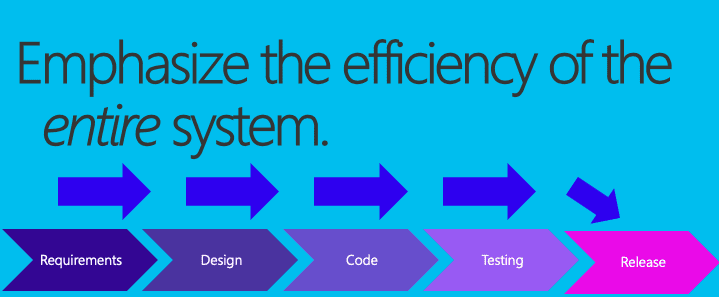
When we worked in Waterfall development environments security often acted as a gate. You had to jump through their hoops, then you were let through, and you could push your code to prod. Awesome, right? Not really. It was slow. Security activities took FOREVER. And things got missed. It was rigid and unpleasant and didn’t result in reliably secure software.
It may seem obvious to new developers that security should not slow down the SDLC, but I assure you, this concept is very, very new. When I was a software developer I referred to the security team as “Those who say no”, and I found almost all of my interactions with them left me frustrated and without helpful answers.
When we (security practitioners) think about The First Way, we must figure out how to get our work done, without slowing down all the other teams. They won’t wait for us, and we can’t set up gates. We have to learn to work the way they do; FAST.
Below I will offer suggestions for how we can work together with the dev and ops teams to ensure we get our mandate done, within the DevOps workflows and processes.
Tools:
First of all, we need to use modern tooling that is made for DevOps pipelines if we are going to put anything into the CI/CD pipeline. Never take an old tool and toss it in there; no DevOps team is going to wait 5 hours for your SAST tool to run. Tune your tools and ensure you select tools that are made for pipelines if that is how you are going to use them. Whenever possible, only run your tools on the ‘delta’ (the code changed in that release, not the entire code base).
Tool Selection:
When selecting tools, remember that not every tool needs to be put in the pipeline. In fact, having tools that are out-of-band, but located on the ‘left’ of the SDLC, can offer even more value and save time. Examples:
- Create automated security unit tests using Bright’s SecTester for java script, to be run before you run the CI/CD
- Package management tools that only serve packages that are not known to be insecure (pre-approved by a security research team)
- Creating your own custom security unit tests, which are often run before the code arrives in the pipeline (for instance, write input validation tests that ensures your code properly handles input taken from the XSS Filter Evasion Cheat Sheet)
- Adding security tooling to the check-in process, such as secret scans (don’t even let them check it in if it looks like there’s a secret in the code)
- Run a DAST such a Bright against your web server or within your CI/CD, after you’ve configured it to run quickly
- Scanning your code repository for known-insecure components. It’s just sitting there, why not use it?
Bugs:
This also means that security bugs should be placed in the same bug tracker or ticketing system that the developers and ops teams are using. They shouldn’t check two systems, that is not efficient.
Finding Vulnerabilities:
If at all possible, we should be providing and/or approving tools that assist in finding vulnerabilities in written code (both the code your team wrote, and the code from dependencies) and running code. This could be SAST + SCA + DAST, or it could be SCA + IAST (run during unit testing, QA and in prod). It could also mean manual secure code review plus a PenTest the week before going live (this is the least-efficient of the three options presented here).
Templates and Code Reuse:
If it makes sense, create templates and provide secure code samples, there’s no need to reinvent the wheel. Also, enable the developers and ops teams to scan their own code by providing tools for them (and training on how to use them safely and effectively).
Think Outside The Box
We (security) can no longer be a bottleneck, we must work to enable them to get their jobs done securely, in anyway we can. Examine your processes to ensure they are efficient; create a second asynchronous (which does not release to prod) pipeline to automate your longer tests; write your own tools if you absolutely have to. The sky is the limit.
Part 6 of this series is available here.