
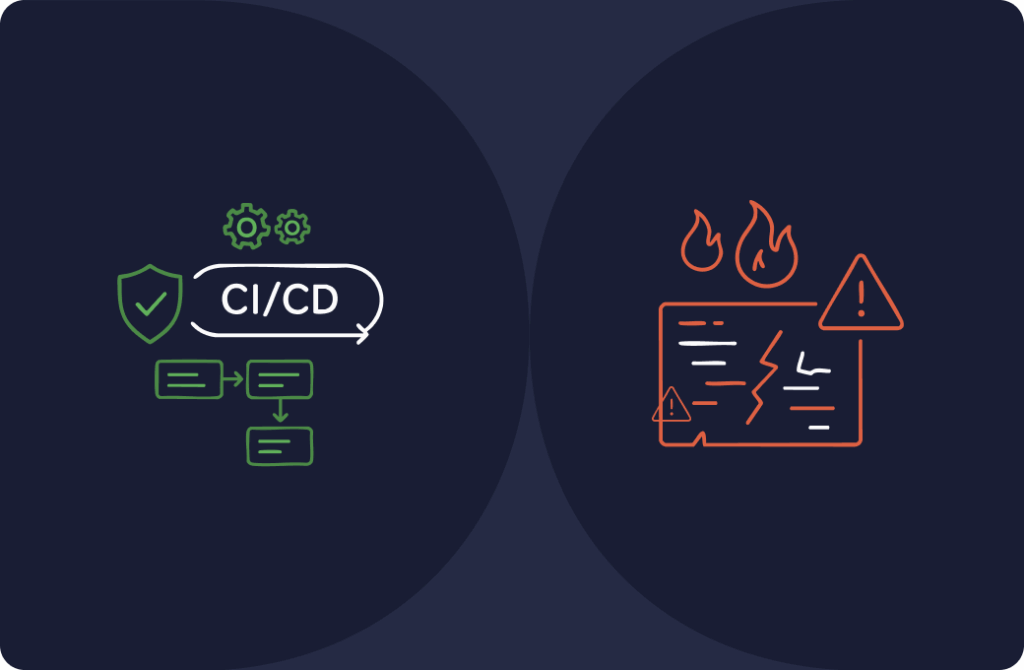

Security that waits for the release gate is like a smoke alarm installed in the basement: by the time it screams, the fire is already upstairs. “Shift-left” simply means moving those alarms into the developer’s editor – scanning, fuzzing and testing while the code is still malleable. Yet teams still postpone AppSec because a last-minute penetration test feels cheaper than wiring checks into every pull request.
Table of Content
Why “Shift-Left” Matters
Cost isn’t the only casualty. When vulnerabilities surface late, they’re often woven through multiple layers – input checks morph into schema rewrites, auth flaws demand refactoring of gateway logic. Release trains stall while developers context-switch from new features to month-old code. Morale dips, too: BlackFog’s 2024 survey found 24 % of CISOs are actively looking to quit, and 93 % of them blame stress from constant incident response. Nothing erodes trust faster than 2 a.m. rollbacks where security looks like a bottleneck, not a partner.
How Developer-First DAST Removes Friction
Moving checks left doesn’t have to feel like adding friction. Developer-centric DAST tools—Bright is a leading example—plug straight into GitHub Actions, Jenkins or GitLab pipelines and finish in seconds. One Fortune-500 software firm that deployed Bright’s scanner during unit testing phase now spots vulnerabilities before code even hits staging, cutting remediation work by about 70 % in both wall-clock and engineer hours. Another case study credits early Bright scans with preventing high-severity flaws from ever reaching QA, saving entire sprints of rework. Because scans run automatically on each commit, developers get feedback while the problem is still in their mental cache, often a one-line fix instead of a multi-team refactor.
If you’re weighing the trade-off, track a few simple metrics:
- Detection ratio: how many vulns surface in development versus production.
- Mean time to remediate (MTTR): days from report to fix; this plummets when issues appear in a pull request, not a customer ticket.
- Scan coverage per sprint: the share of code paths exercised automatically.
Bright customers, thanks to tight CI/CD integration and near-zero false positives, often watch the first two numbers rise and fall in the right directions within a single quarter.
In the end, shift-left isn’t extra work; it’s shifting the same work to a cheaper, calmer moment. Spend a few minutes per commit now or gamble on all-hands fire-fights later. The compound interest of software defects is relentless, better to let it work for you than against you.