
When I first started testing large language models, the work felt deceptively simple. Red teaming looked like a lock-and-key problem: try a prompt, break a guardrail, log the failure, repeat. Jailbreak prompts, refusal rates, and a quick confidence boost once the model “passed.”
That confidence rarely survives contact with production.
Most real-world LLM failures don’t happen in sandboxes. They happen in messy, interconnected systems – where models are wired into tools, workflows, and real decision-making paths. Modern red teaming isn’t about clever phrasing anymore. It’s about understanding what the model is allowed to touch and how small misjudgments compound once automation kicks in.
Table of Contants:
1. The False Comfort of the Sandbox
2. From Model Safety to System Safety
3. Threat Modeling LLMs Like Software (With a Twist)
4. Multi-Turn Context Is Where Integrations Break
5.Automation Changes Everything
7. Humans Are Still in the Loop (Whether You Like It or Not)
8. What Good LLM Red Teaming Looks Like Now
9. Conclusion
The False Comfort of the Sandbox
Sandbox testing assumes isolation. Production LLMs are anything but isolated.
They retrieve data from vector stores, call APIs, interact with MCP servers, execute tools, read internal documents, trigger workflows, and often act on behalf of users with real permissions. When something breaks, it rarely looks like a clean policy violation. It looks like:
- An API call that technically succeeds but semantically shouldn’t have happened
- A tool invoked with subtly altered parameters
- A workflow triggered out of sequence
- A privilege boundary crossed indirectly, without explicit intent
If a red team engagement only tests the chatbot surface and ignores these integrations, it’s testing a demo – not the product users actually rely on.
From Model Safety to System Safety
There’s a quiet but important shift happening in mature LLM security programs: a move away from model-level alignment checks toward system-level risk analysis.
Early red teaming techniques focused almost entirely on prompt injection:
- Ignore previous instructions.
- Role-playing exploits
- Encoding tricks (Base64, Unicode abuse, ROT13)
- Obfuscation and translation attacks
These techniques still matter, but mostly as hygiene checks. They test surface alignment, not operational risk. A model can be perfectly aligned and still cause real damage once it’s embedded in a production system.
Modern deployments involve tools, retrieval pipelines, memory, and delegated actions. When models are connected to MCPs, plugins, or third-party APIs, the attack surface expands dramatically:
- The model can be socially engineered into calling the wrong tool
- Tool arguments can be subtly manipulated while sounding reasonable
- Partial failures can cascade across systems
- Permission boundaries can be crossed without explicit violations
At that point, the question stops being “Can I make the model say something bad?” and becomes “Can I get the system to do something unsafe – and not realize it?”
That’s where sandbox testing ends.
Threat Modeling LLMs Like Software (With a Twist)
Today, I approach LLM red teaming much more like application security – with an important difference: the model is both a logic engine and part of the attack surface.
The starting points are familiar:
- Assets: sensitive data, money, actions, reputation
- Attack surfaces: prompts, memory, tools, retrieval, logs
- Trust boundaries: what the model decides vs. what it merely suggests
- Failure modes: silent hallucination, overconfidence, partial compliance
What makes LLMs uniquely dangerous is their dual role. They reason, interpret intent, and act – often without a clear separation between “thinking” and “doing.” Traditional systems don’t improvise. LLMs do. And that improvisation is where things get interesting – and risky.
Multi-Turn Context Is Where Integrations Break
One of the biggest mindset shifts for me was treating LLMs less like “models” and more like untrusted components in a distributed system.
Most serious failures don’t happen in a single turn. They emerge gradually, as context accumulates and trust builds. This mirrors social engineering for a reason: LLMs are highly sensitive to narrative continuity.
A model that behaves safely in isolation can act very differently after ten turns, especially when it’s optimizing toward a goal or workflow. Context isn’t just memory – it’s leverage.
Red teaming that doesn’t simulate long-running interactions is missing where most integration failures actually occur.
Automation Changes Everything
Once tools are introduced, manual red teaming stops scaling.
No human can realistically enumerate all combinations of:
- User intent
- Conversation history
- Tool availability
- API permissions
- Third-party behavior
Some of the most serious failures I’ve seen came from:
- Misinterpreting tool outputs as ground truth
- Overconfidence in action execution
- Weak validation of tool arguments
- Recursive or self-triggering behavior
The most dangerous failures aren’t jailbreaks. They’re confident, but incorrect actions are taken under the assumption that the model is helpful.
When Metrics Lie
Another hard lesson: benchmarks do not equal safety.
A system can ace refusal-rate metrics and still leak data through tools, call the wrong APIs, or quietly perform harmful actions. Counting blocked prompts is meaningless if partial compliance still leads to real-world impact.
The most dangerous outputs aren’t obviously wrong. They’re credibly wrong. Polished, plausible, and delivered with confidence. That’s exactly why they slip past both automated checks and human reviewers.
Humans Are Still in the Loop (Whether You Like It or Not)
We spend a lot of time talking about aligning models – and far less time aligning users.
Advanced red teaming means observing how people actually respond to model behavior:
- Do users notice warnings, or ignore them?
- How long does correction take?
- How quickly does trust form?
- Does the interface amplify risk or dampen it?
In many systems, the interface, not the model, is the weakest link.
What Good LLM Red Teaming Looks Like Now
At this point, my bar for meaningful red teaming is high.
It must be scenario-driven, not prompt-driven.
It must include multi-turn, tool-using, memory-enabled behavior.
The model should be treated as an adversarial collaborator, not a passive component.
Impact matters more than policy checklists.
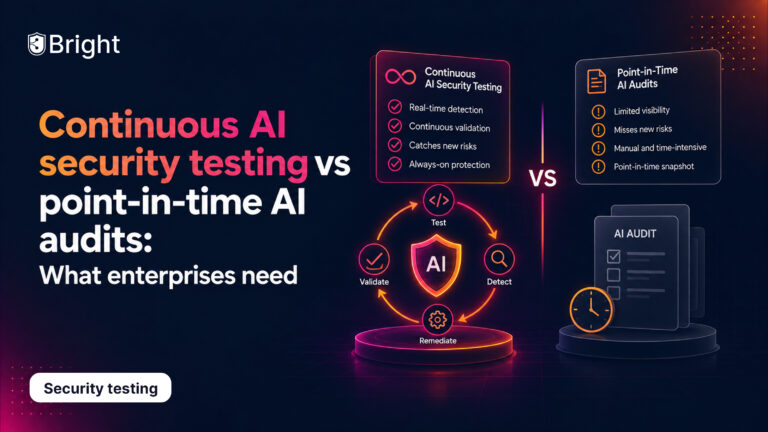
Most importantly, red teaming must be continuous. As prompts evolve, tools change, and users adapt, model behavior shifts in ways static tests will never capture.
The most mature teams feed red teaming results directly into:
- Tool permission design
- MCP access boundaries
- System prompts and routing logic
- UX safeguards around automation
When red teaming informs architecture, not just about reporting failures, become design inputs instead of post-mortems.
Conclusion
LLM red teaming is no longer about outsmarting a chatbot. It’s about understanding how intelligence, automation, and trust interact under pressure.
As models become more capable and more agentic, the cost of getting this wrong grows faster than most teams expect.
Static tests provide comfort, not safety. Real security comes from continuous, realistic, system-level evaluation that reflects how LLMs are actually used and abused in production.
Stop asking only what the model can say.
Start asking what the system can do.
Beyond the sandbox, failures don’t look like funny screenshots.
They look like confident decisions made at scale, with real consequences.