
Reducing scan duration by 50% while increasing security coverage to 90% in modern AI-native enterprise environments
Table Of Contents
- Introduction
- The Enterprise AppSec Scaling Problem
- Why Banking Environments Create Massive Security Complexity
- The Challenge Of Securing 6,000+ Repositories
- Why Traditional AppSec Couldn’t Scale
- The Hidden Cost Of Long Scan Durations
- AI-Generated Development Increased Security Pressure
- The Shift Toward Runtime Validation
- Reducing Scan Duration By 50%
- Increasing Security Coverage To 90%
- Runtime DAST Vs Traditional Scanning
- Eliminating Security Bottlenecks For Developers
- How BrightSec Helps Large Enterprises Scale AppSec
- Key Lessons For Modern Security Leaders
- The Future Of Enterprise AppSec
- Final Thoughts
Introduction
Modern enterprise AppSec programs face a scaling challenge unlike anything security teams have experienced in previous generations of software development. Large organizations now manage thousands of repositories, distributed engineering teams, API-driven architectures, continuous deployment pipelines, and increasingly AI-generated development workflows. Traditional security models were never designed for this level of engineering velocity and operational complexity.
This challenge becomes even more difficult in global banking environments where security, compliance, runtime visibility, and development speed must all operate simultaneously. Organizations managing highly sensitive financial systems cannot afford slow remediation cycles, incomplete security coverage, or excessive AppSec bottlenecks. At enterprise scale, even small inefficiencies in security workflows can create enormous operational overhead across engineering teams.
The rise of the best AI coding assistants, best AI coding tools, and best AI models for coding has dramatically accelerated software generation across enterprise engineering environments dramatically. Teams using AI for coding can now generate APIs, workflows, and production-ready services significantly faster than traditional AppSec programs can validate manually. This creates a growing gap between software delivery speed and runtime security validation.
Modern enterprise organizations like RBC are increasingly shifting toward scalable runtime security models focused on:
- Faster runtime validation
- Automated exploit verification
- Continuous API security testing
- Runtime DAST
- Reduced developer friction
Instead of relying only on traditional point-in-time scanning. Platforms like BrightSec help organizations modernize AppSec workflows by reducing scan duration, improving runtime validation, and scaling application security coverage across large distributed environments. Because modern enterprise AppSec is no longer measured only by how many vulnerabilities organizations discover – but increasingly by how efficiently they secure software at scale.
The Enterprise AppSec Scaling Problem
Large enterprises now operate software ecosystems at an enormous scale.
Modern organizations frequently manage:
- Thousands of repositories
- Hundreds of APIs
- Distributed microservices
- CI/CD automation pipelines
- Multi-cloud environments
This creates major operational pressure for AppSec teams.
Traditional security workflows often depend heavily on:
- Manual validation
- Static analysis reviews
- Point-in-time scanning
- Human prioritization
At enterprise scale, these workflows quickly become operational bottlenecks.
As organizations increasingly adopt:
- AI-generated applications
- Autonomous development workflows
- API-first architectures
Security validation requirements grow dramatically faster than manual AppSec teams can scale.
This is one of the biggest operational cybersecurity problems modern enterprises face today.
Why Banking Environments Create Massive Security Complexity
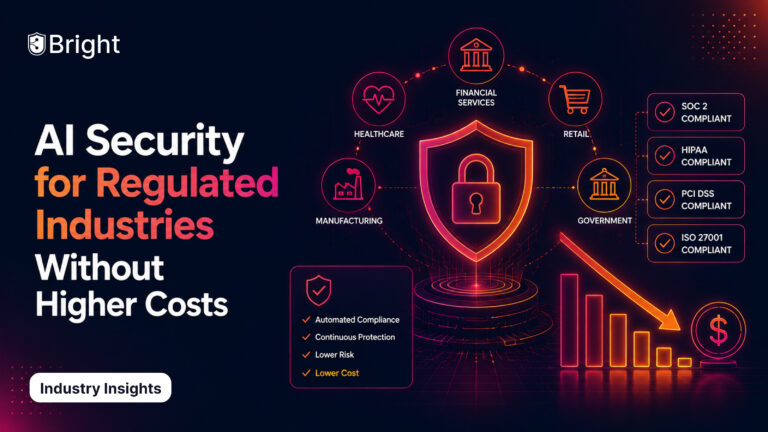
Banking organizations operate under some of the strictest security and compliance requirements in the world.
Financial systems must continuously secure:
- Customer data
- Payment infrastructure
- Transaction APIs
- Internal applications
- Third-party integrations
While maintaining:
- High availability
- Regulatory compliance
- Runtime visibility
- Fast development cycles
This creates enormous pressure on engineering and AppSec teams simultaneously.
Large banking organizations cannot afford:
- Long scan durations
- Incomplete security coverage
- High false-positive rates
- Slow remediation workflows
Because operational delays directly impact both:
Business scalability
And:
Security posture
The Challenge Of Securing 6,000+ Repositories
Managing AppSec across 6,000+ repositories creates several major operational challenges.
Security teams must continuously validate:
- APIs
- Authentication flows
- Runtime services
- CI/CD pipelines
- Third-party dependencies
Across thousands of independently changing codebases.
Traditional scanning workflows often struggle because:
- Scan duration becomes too slow
- Coverage becomes inconsistent
- Findings overwhelm developers
- Validation workflows do not scale
This becomes especially difficult in modern AI-native engineering environments where repositories evolve continuously through automated development workflows.
Without scalable automation, AppSec quickly becomes:
A deployment bottleneck
Instead of:
A continuous runtime security layer
Why Traditional AppSec Couldn’t Scale
Traditional AppSec workflows were designed for:
- Smaller applications
- Predictable architectures
- Slower release cycles
- Human-written software
Modern enterprise systems behave very differently.
Today’s applications increasingly depend on:
- APIs
- Runtime orchestration
- Cloud-native infrastructure
- AI-generated services
- Autonomous workflows
Traditional security programs often rely heavily on:
- Static analysis
- Manual triage
- Point-in-time testing
But these workflows create operational bottlenecks when organizations manage thousands of repositories simultaneously.
Security teams increasingly need:
Continuous runtime validation
Instead of isolated scanning events.
The Hidden Cost Of Long Scan Durations
Long scan durations create major operational inefficiencies across enterprise engineering environments.
Slow scanning workflows often lead to:
- Delayed releases
- Reduced developer productivity
- CI/CD bottlenecks
- Slower remediation
- Reduced security adoption
In large enterprises, scan duration directly impacts:
Engineering velocity
This becomes especially dangerous in organizations using:
- AI-assisted development
- Continuous deployment
- High-frequency release cycles
Because software delivery speed continues to accelerate, while traditional validation workflows remain slow.
Reducing scan duration is no longer just a technical optimization.
It is an operational business requirement.
AI-Generated Development Increased Security Pressure
Modern engineering teams increasingly rely on:
- GitHub Copilot
- Claude
- Cursor
- ChatGPT
- Gemini
To generate:
- APIs
- Infrastructure logic
- Production services
- Automation workflows
The rise of the best AI coding assistants and best AI coding tools has dramatically accelerated development speed across enterprise engineering organizations.
But AI-generated applications also introduce:
- Larger attack surfaces
- Faster API expansion
- More runtime complexity
- Increased AppSec noise
Even small increases in vulnerability rates become dangerous at enterprise scale because insecure patterns can spread rapidly across thousands of repositories.
This creates enormous validation pressure for AppSec teams.
Traditional manual workflows simply cannot keep pace with AI-native engineering velocity anymore.
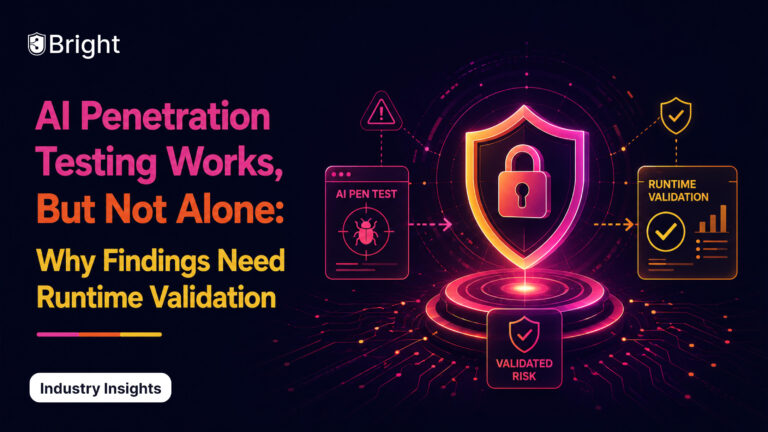
The Shift Toward Runtime Validation
Modern enterprises increasingly realize that static analysis alone cannot provide sufficient runtime visibility.
Static tools frequently generate:
- Contextless findings
- Duplicate alerts
- Non-exploitable vulnerabilities
- Large false-positive volumes
Runtime validation changes this operational model completely.
Modern runtime DAST continuously:
- Executes applications
- Simulates attacks
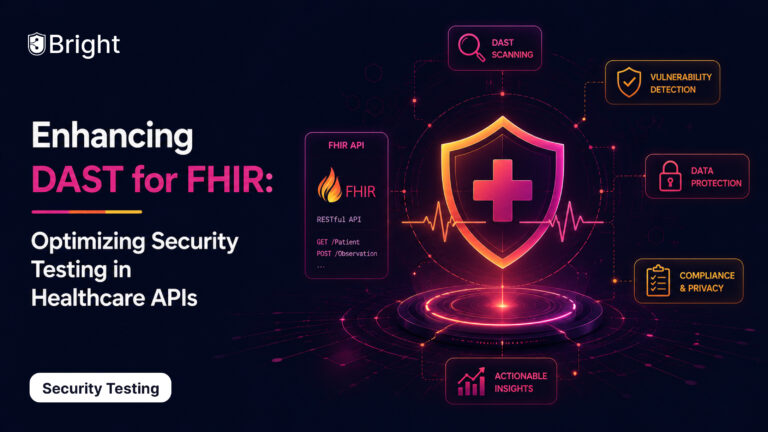
- Tests APIs dynamically
- Validates exploitability
- Confirms remediation success
This dramatically improves:
- Prioritization
- Remediation efficiency
- Security signal quality
- Operational scalability
Runtime validation allows AppSec teams to focus on:
Verified exploitable vulnerabilities instead of theoretical assumptions
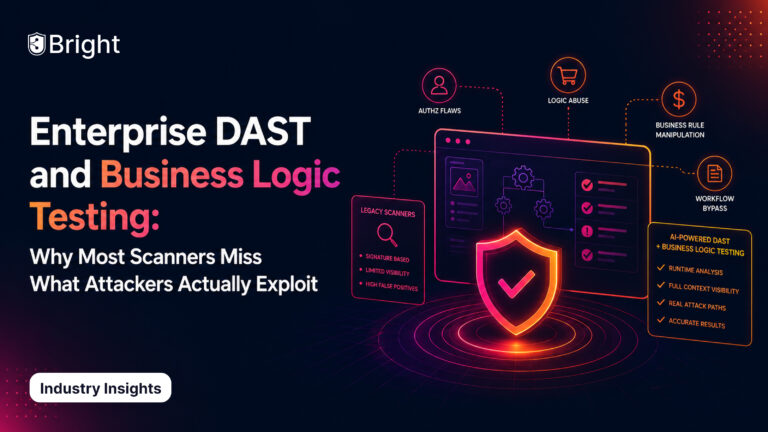
Reducing Scan Duration By 50%
Reducing scan duration became critical for improving enterprise AppSec scalability.
Faster runtime validation workflows help organizations:
- Accelerate CI/CD pipelines
- Reduce developer interruption
- Improve remediation speed
- Increase deployment velocity
Modern runtime DAST platforms help reduce scan duration through:
- Automated API discovery
- Continuous validation
- Parallel testing
- Runtime orchestration optimization
Reducing scan time by 50% significantly improves:
- Engineering productivity
- Security adoption
- AppSec scalability
- Operational efficiency
Especially across thousands of repositories operating simultaneously.
Increasing Security Coverage To 90%
Security coverage remains one of the biggest operational challenges in large enterprises.
Many organizations struggle with:
- Incomplete API visibility
- Unscanned repositories
- Runtime blind spots
- Inconsistent validation workflows
Modern runtime security platforms help improve coverage by continuously validating:
- APIs
- Runtime services
- Authentication flows
- Dynamic execution paths
Increasing security coverage to 90% dramatically improves:
- Runtime visibility
- Attack surface awareness
- Exploit detection
- Operational confidence
Especially in environments managing thousands of continuously evolving applications.
Runtime DAST Vs Traditional Scanning
Traditional AppSec Workflow:
Code Scan
↓
Static Findings
↓
Manual Validation
↓
Slow Remediation
Modern Runtime Validation Workflow:

Runtime DAST significantly improves:
- Scan efficiency
- Validation accuracy
- Developer trust
- Operational scalability
Compared to traditional static-only workflows.
Eliminating Security Bottlenecks For Developers
One of the biggest enterprise AppSec challenges is developer friction.
Security workflows that:
- Slow deployments
- Generate excessive alerts
- Interrupt CI/CD pipelines
Eventually, it will reduce engineering productivity significantly.
Modern AppSec programs increasingly focus on:
- Faster validation
- Lower false positives
- Runtime exploit verification
- Reduced developer interruption
Because modern software delivery depends heavily on:
Continuous engineering velocity
Runtime validation platforms help reduce friction by continuously prioritizing:
Actionable runtime vulnerabilities
Instead of overwhelming developers with theoretical findings.
How BrightSec Helps Large Enterprises Scale AppSec
BrightSec focuses specifically on:
Runtime exploit validation for modern enterprise environments
Instead of relying only on:
- Static signatures
- Point-in-time scanning
- Theoretical assumptions
BrightSec continuously validates:
- Runtime vulnerabilities
- API exploitability
- Reachable attack paths
- Dynamic workflow behavior
This helps large organizations:
- Reduce scan duration
- Improve security coverage
- Lower false positives
- Accelerate remediation
- Scale AppSec efficiently
Especially across:
- Large repository environments
- API-first architectures
- AI-native development workflows
- Continuous deployment pipelines
As enterprise engineering environments continue expanding rapidly, runtime validation becomes increasingly critical for operational AppSec scalability.
Key Lessons For Modern Security Leaders
Modern enterprise AppSec programs increasingly require:
- Runtime validation
- Continuous API testing
- Automated exploit verification
- Reduced developer friction
- Operational scalability
Large organizations can no longer rely only on:
- Manual validation
- Static-only workflows
- Point-in-time testing
Because modern software ecosystems evolve continuously.
Security leaders increasingly focus on:
- Faster remediation
- Better runtime visibility
- Continuous exploit validation
- Operational efficiency
As the foundation of scalable AppSec programs.
The Future Of Enterprise AppSec
The future of enterprise AppSec will increasingly depend on:
- Runtime DAST
- API security testing
- Continuous exploit verification
- Autonomous validation workflows
- AI-aware runtime testing
As organizations continue adopting:
- AI-generated applications
- Autonomous engineering workflows
- API-driven systems
- Runtime AI orchestration
Security validation must evolve continuously as well.
Modern AppSec programs increasingly require:
Continuous runtime security visibility at enterprise scale
Instead of relying only on isolated scanning events.
Final Thoughts
Modern enterprise AppSec is no longer just about discovering vulnerabilities.
It is increasingly about:
Operational scalability and runtime validation efficiency
Large organizations managing thousands of repositories must continuously balance:
- Engineering velocity
- Security coverage
- Runtime visibility
- Developer productivity
The rise of the best AI coding assistants, best AI coding tools, and best generative AI for coding is dramatically accelerating software delivery across enterprise engineering environments. But faster development also creates:
- Larger attack surfaces
- More runtime complexity
- More APIs
- Faster vulnerability propagation
Traditional AppSec workflows alone cannot scale efficiently in these environments.
This is why modern organizations increasingly rely on:
- Runtime DAST
- Continuous API validation
- Automated exploit verification
- Runtime security testing
Platforms like BrightSec help enterprises reduce scan duration, improve runtime visibility, and scale AppSec coverage efficiently across large distributed environments.
Because in modern AI-native enterprise ecosystems, the most effective AppSec programs are no longer measured only by how many vulnerabilities they discover.
They are increasingly measured by:
How efficiently they help organizations secure software at scale without slowing engineering velocity.