
Table Of Contents
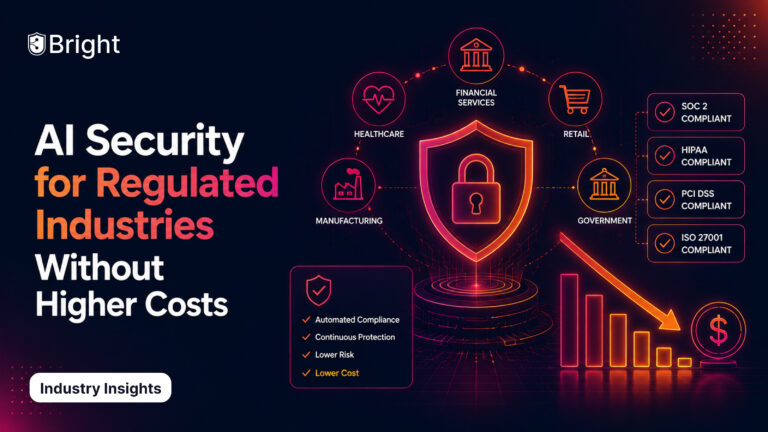
- Why Application Security Is Becoming More Expensive
- The Hidden Cost of Security Findings
- Why Traditional Security Testing Creates Waste
- How Automated Security Validation Helps
- Protecting Your Budget with Bright STAR
- Conclusion
Why Application Security Is Becoming More Expensive
Application security has become more crucial than ever before. At the same time, application security has become costlier than ever before.
In today’s world, companies are developing more applications, rolling out more updates, and even incorporating AI-based coding assistants to develop their applications faster. Though all of these things contribute to increased efficiency, at the same time, they create chances of vulnerabilities getting into applications.
It is not about identifying security issues alone, as the security department has enough technology to do so. It is about knowing which one is an actual vulnerability that requires urgent action.
Every unnecessary investigation consumes engineering time, security resources, and ultimately money. That’s why many organizations are beginning to view application security as both a security challenge and a business challenge.
The Hidden Cost of Security Findings
Security findings are not free.
Each such vulnerability found by the scanner always starts a process.
First, security professionals analyze the finding, then developers look into what’s wrong in the code. Teams will determine priorities for fixing and perform extra tests before release.
But when such a finding is false, redundant, or exploitable, that effort becomes wasted.
The most underreported and expensive cost in application security is definitely that of false positives. The development team will be wasting its time investigating alerts that did not pose any actual risk to start with. Meanwhile, the security team spends its efforts on triage rather than mitigating the risks.
This all leads to security debt, remediation backlog, and a lack of trust in security tools among developers.c
Vulnerabilities That Worsen Application Security
There are certain vulnerabilities that take more resources to manage than others.
SQL Injection
SQL injection is arguably among the worst vulnerabilities found in applications in terms of damage. This type of vulnerability could lead to the exposure of the most sensitive databases, user details, and business-related details.
The work required by security professionals to validate the possibility of exploiting user input in databases has been substantial.
Cross-Site Scripting (XSS)
XSS vulnerabilities remain prevalent in today’s modern applications despite all the security recommendations.
Application development requires dealing with vast amounts of user-generated content, meaning that multiple XSS vulnerabilities should be evaluated to determine if any can be exploited.
Cross-Site Request Forgery (CSRF)
CSRF vulnerabilities typically affect authenticated users and could allow them to perform certain unwanted activities in the application.
Incomplete protection from CSRF vulnerabilities is still rampant among many companies.
Broken Access Control
Broken Access Control remains one of the most critical OWASP risks.
These vulnerabilities often require deep analysis because testers must determine whether unauthorized users can access sensitive functionality, privileged accounts, or protected resources.
API Security Risks
Broken Object Level Authorization (BOLA), too much data exposure, and weak authentication are examples of vulnerabilities that may reveal critical company data. API-based security issues are especially difficult to address due to their inherent nature.
Risks of Using Artificial Intelligence (AI)
With the adoption of artificial intelligence in use cases, novel threats are appearing.
Prompts injection, vulnerable code written by AI, flaws associated with MCPs, and data leakages from large language models are among the new vulnerabilities that AppSec specialists must be aware of.
Why Traditional Security Testing Creates Waste
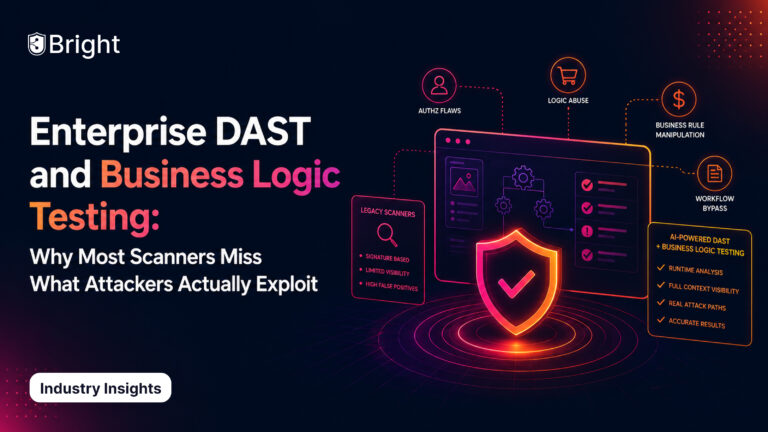
Most security tools are designed to identify potential vulnerabilities.
The problem is that many tools stop there.
Security teams are left to determine whether findings are exploitable, how serious they are, and whether remediation actually fixed the issue.
This manual validation process creates significant overhead.
Developers become overwhelmed by tickets. Security teams spend valuable time reviewing findings. Engineering managers struggle to prioritize remediation efforts.
The result is slower releases, higher operational costs, and growing security backlogs.
Organizations need a way to focus on verified risk rather than theoretical risk.
How Automated Security Validation Helps
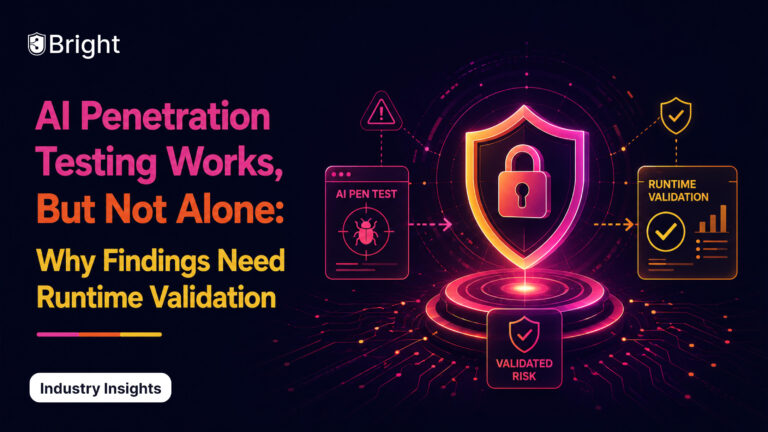
Automated security validation helps organizations reduce unnecessary work by proving whether vulnerabilities are actually exploitable.
Instead of generating hundreds of findings that require manual investigation, validated testing focuses attention on issues that present genuine risk.
This approach provides several benefits.
First, developers spend less time reviewing false positives.
Second, security teams can prioritize remediation efforts more effectively.
Third, organizations reduce operational costs by eliminating unnecessary investigation and validation work.
Most importantly, teams gain greater confidence in both findings and fixes.
Rather than wondering whether a vulnerability is real, security teams can focus on resolving issues that have already been verified.
Protecting Your Budget with Bright STAR
As software development accelerates, organizations need security solutions that help them work smarter rather than simply generating more alerts.
Bright STAR combines AI-powered discovery and remediation with Bright’s deterministic testing engine to identify and validate real vulnerabilities. Rather than bombarding teams with theoretical findings, STAR makes sure that the organization focuses on vulnerabilities that will affect their applications.
No matter if you’re handling SQL injection attacks, Cross-site scripting attacks, Cross-site request forgery attacks, broken access control issues, API security vulnerabilities, or even AI security vulnerabilities, validation makes sure that teams aren’t wasting time on non-existent problems.
In this way, remediation becomes faster, more accurate, and more cost-effective.
Conclusion
However, the largest threat to your wallet is not necessarily a successful cyber attack.
In many cases, it is the increasing expenses associated with processing security discoveries.
With applications scaling up and increased use of AI to generate software code, there is a need for effective tools to determine true threats without bombarding engineers with too much information.
Automated validation will help you avoid doing anything superfluous, streamline your remediation, and manage your AppSec spending.
By prioritizing only confirmed threats instead of all possible discoveries, you can increase the level of your protection while using the most valuable asset of yours – engineering resources – optimally.
This is precisely what Bright STAR will do for you!