
Why the future of secure software development depends on autonomous runtime validation – not just AI-generated code
Table Of Contents
- Introduction
- The AI Coding Explosion
- Why AI Coding Assistants Alone Create Risk
- What Agentic Security Actually Means
- Why Traditional AppSec Cannot Keep Up
- The Runtime Security Gap
- How AI Systems Introduce New Attack Paths
- Prompt Injection Changed The Security Model
- MCP Servers And Autonomous Tool Abuse
- Why Static Analysis Fails AI Applications
- The Rise Of Runtime AI Validation
- The New Agentic Automation Layer
- How BrightSec Enables Agentic Security
- What Modern Engineering Teams Need Next
- The Future Of AI-Native Security
- Final Thoughts
Introduction
AI coding assistants are transforming software development faster than ever before. Tools like GitHub Copilot, Claude, ChatGPT, Cursor, and Gemini are helping teams generate production-ready applications, APIs, and workflows in minutes. The rise of the best AI coding tools, coding assistants, and coding models has dramatically accelerated engineering productivity across modern SaaS companies.
But while AI speeds up development, it also introduces a completely new category of runtime security risks. Modern AI systems no longer just generate code – they execute workflows, access APIs, interact with MCP servers, and trigger autonomous actions dynamically. This creates vulnerabilities that traditional AppSec tools struggle to detect, including prompt injection, runtime API abuse, MCP workflow exploitation, and autonomous tool misuse.
Most organizations assume AI coding assistants can also secure the code they generate. In reality, AI systems optimize for speed and plausible output – not deterministic runtime security validation. This is creating a dangerous gap between AI-generated development velocity and security validation capacity.
That gap is driving the rise of Agentic Security: autonomous runtime security systems that continuously discover vulnerabilities, validate exploitability, monitor AI workflows, and re-test applications dynamically. Platforms like BrightSec are helping organizations move beyond static security testing toward continuous runtime validation for modern AI-native applications.
The AI Coding Explosion
AI-assisted development is scaling rapidly across the software industry.
Organizations are increasingly using AI for:
- Code generation
- Infrastructure automation
- API development
- Internal tooling
- Workflow orchestration
This acceleration is real.
Teams using the best AI model for coding can now build and deploy applications significantly faster than traditional engineering workflows allowed.
But faster software generation also means:
- Faster vulnerability creation
- Faster API exposure
- Faster runtime complexity growth
And traditional AppSec teams cannot manually review everything at AI speed anymore.
This is creating a major imbalance between:
Development velocity
And:
Security validation capacity
Why AI Coding Assistants Alone Create Risk
AI coding assistants are fundamentally prediction engines.
They optimize for:
- Plausible output
Not:
- Proven security
This distinction matters enormously.
Most AI systems do not:
- Validate exploitability
- Simulate attacks
- Test runtime behavior
- Analyze dynamic workflows
- Understand tool execution chains
As a result, AI-generated applications may contain:
- Vulnerable APIs
- Weak authentication logic
- Prompt injection exposure
- Insecure MCP integrations
- Runtime privilege escalation paths
Even when the generated code appears technically correct.
This creates dangerous false confidence for development teams.
What Agentic Security Actually Means
Agentic Security represents the next evolution of application security.
Instead of relying only on:
- Static scanning
- Human review
- Periodic pentests
Agentic Security systems continuously:
- Discover attack surfaces
- Simulate runtime attacks
- Validate exploitability
- Monitor AI workflows
- Re-test remediation automatically
This creates:
An autonomous runtime security layer around AI-generated systems.
Modern AI applications evolve continuously.
Security validation must evolve continuously, too.
This is especially critical for:
- AI-generated APIs
- Autonomous agents
- MCP architectures
- Runtime tool execution workflows
Because vulnerabilities can emerge dynamically during runtime execution, not just inside static code.
Why Traditional AppSec Cannot Keep Up
Traditional AppSec was designed for:
- Human-written code
- Predictable applications
- Static architectures
- Slower release cycles
Modern AI systems operate differently.
They:
- Change dynamically
- Execute instructions autonomously
- Generate runtime workflows
- Chain APIs together automatically
Traditional security tools struggle because they primarily focus on:
- Static analysis
- Known signatures
- Predictable behavior
But AI systems behave contextually.
Their attack surface changes based on:
- Prompts
- Inputs
- Runtime state
- Tool access
- API connectivity
This is why many traditional security models fail to detect modern AI attacks effectively.
The Runtime Security Gap
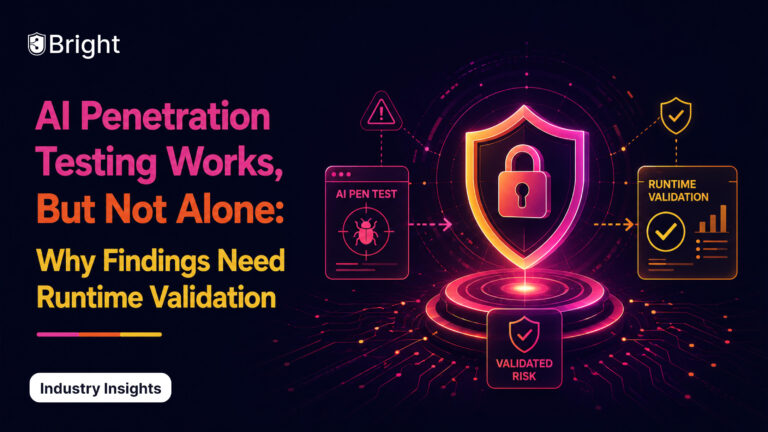
One of the biggest problems in AI security today is the runtime validation gap.
Most security tools can identify:
- Potential vulnerabilities
But they cannot reliably confirm:
- Runtime exploitability
This creates two major issues:
- False positives
- False confidence
Modern AI vulnerabilities often depend on:
- Runtime context
- Prompt execution
- Tool behavior
- Dynamic API flows
Static analysis alone cannot reliably understand these execution chains.
This is why runtime validation is becoming one of the most important areas in modern AppSec.
How AI Systems Introduce New Attack Paths
Modern AI systems create entirely new categories of attack surface.
Traditional applications followed relatively predictable architectures:
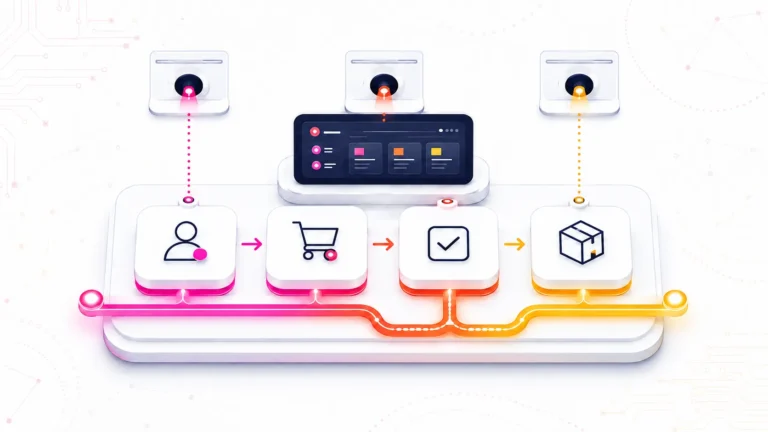
User – Application – Database
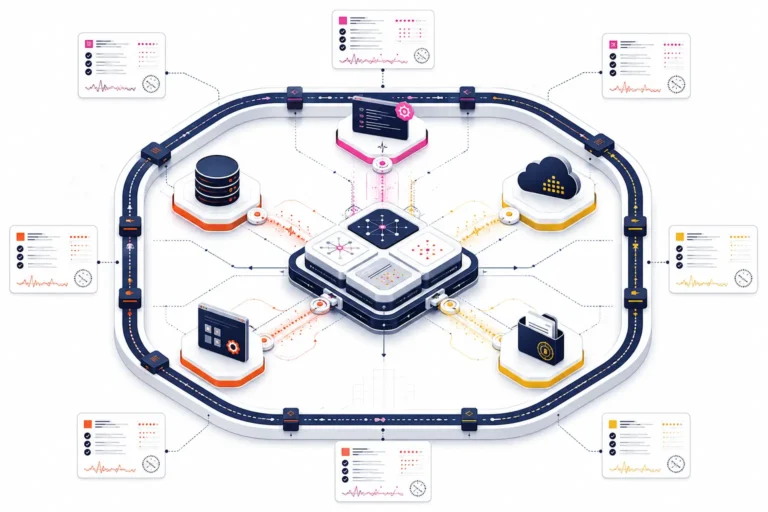
Modern AI applications look very different:
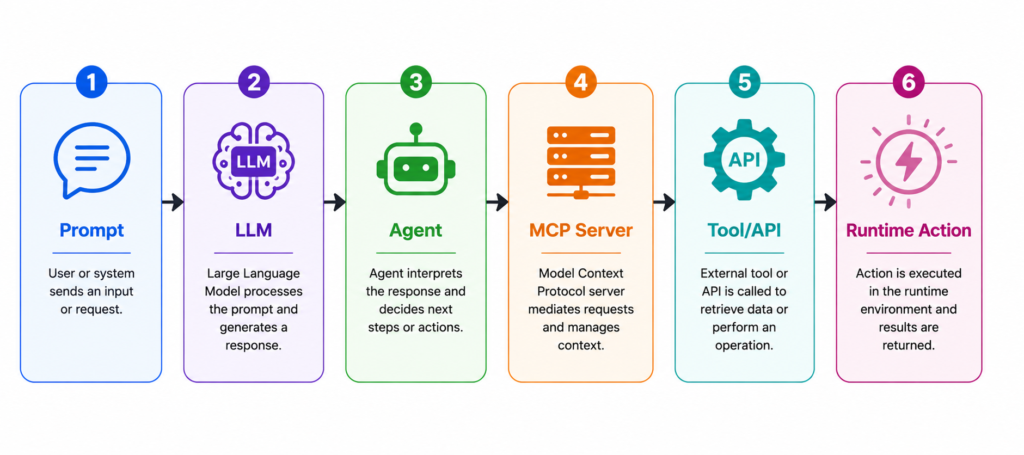
Every layer introduces additional risk:
- Prompt injection
- Tool abuse
- API exploitation
- Runtime data leakage
- Autonomous execution abuse
This complexity increases dramatically when LLMs interact directly with:
- Internal systems
- Databases
- Third-party APIs
- MCP servers
Traditional security boundaries no longer work effectively in these environments.
Prompt Injection Changed The Security Model
Prompt injection fundamentally changed how AI systems are attacked.
Unlike traditional vulnerabilities, prompt injection does not require:
- Broken code
- Memory corruption
- Traditional exploits
Instead, attackers manipulate:
- Model behavior
- Tool execution
- Runtime logic
- System instructions
This makes prompt injection:
A control-plane attack – not just an input validation issue.
Simple prompts can trigger:
- Unauthorized API calls
- Database access
- Internal tool execution
- Sensitive data exposure
Traditional validation methods often fail because LLMs treat:
- Instructions
And: - Data
As part of the same input stream.
MCP Servers And Autonomous Tool Abuse
MCP servers significantly expand AI attack surfaces.
Modern AI systems increasingly rely on MCP architectures to:
- Access tools
- Execute workflows
- Trigger APIs
- Interact with enterprise systems
But every connected tool introduces additional runtime risk.
A successful prompt injection attack may:
- Trigger unauthorized tool execution
- Dump internal databases
- Access hidden APIs
- Leak sensitive business data
This creates security problems that traditional AppSec programs were never designed to handle.
Modern security testing must now validate:
- Tool execution chains
- Runtime permissions
- Agent behavior
- MCP workflow security
Continuously.
Why Static Analysis Fails AI Applications
Static analysis tools are designed for:
- Predictable logic
- Fixed execution paths
- Deterministic applications
AI systems are not deterministic.
Their behavior changes dynamically based on:
- User prompts
- Runtime state
- Retrieved context
- Tool execution results
This means vulnerabilities often exist:
During runtime behavior
Not:
Directly inside the source code
Static scanners cannot reliably detect:
- Prompt injection
- Tool abuse
- Runtime data leakage
- Dynamic workflow exploitation
This is why modern AI security increasingly depends on runtime validation instead of static assumptions alone.
The Rise Of Runtime AI Validation
Modern AI systems require:
- Runtime testing
- Exploit verification
- Workflow validation
- Prompt attack simulation
- Tool execution monitoring
This is where Agentic Security becomes essential.
Instead of generating:
Static vulnerability reports
Modern runtime platforms continuously:
- Simulate attacks
- Validate exploitability
- Monitor APIs
- Test workflows
- Re-test fixes automatically
This creates:
Continuous runtime security assurance for AI systems.
The New Agentic Automation Layer
The industry is now moving beyond:
AI coding assistants
Toward:
Autonomous security validation layers
This shift is becoming critical because:
- AI-generated code changes continuously
- APIs evolve rapidly
- Runtime workflows expand constantly
- MCP integrations create dynamic risk
Security validation must now operate:
- Continuously
- Autonomously
- At machine speed
This is why modern organizations are increasingly adopting:
- Runtime DAST
- AI workflow validation
- Autonomous exploit testing
- Continuous runtime monitoring
As core parts of AI-native security programs.
How BrightSec Enables Agentic Security
BrightSec focuses specifically on:
Runtime exploit validation for modern AI systems.
Instead of relying only on:
- Static analysis
- Signature matching
- Theoretical findings
BrightSec continuously validates:
- Prompt injection risks
- API vulnerabilities
- MCP workflows
- Runtime exploitability
- Tool execution chains
This allows engineering teams to:
- Reduce false positives
- Detect runtime risks earlier
- Validate AI-generated APIs
- Continuously secure AI workflows
- Re-test vulnerabilities automatically
As AI-generated applications continue scaling, runtime validation becomes one of the most important security capabilities modern organizations need.
What Modern Engineering Teams Need Next
The future of secure software development will depend on:
- Continuous runtime validation
- Autonomous exploit verification
- AI-aware DAST
- Runtime API monitoring
- Agentic security automation
Because AI-generated systems introduce:
- Dynamic execution paths
- Continuous runtime change
- Autonomous behavior
- Complex API interactions
Traditional security models alone cannot keep up anymore.
Modern security programs must evolve toward:
Continuous autonomous validation.
The Future Of AI-Native Security
AI systems will continue becoming:
- Faster
- More autonomous
- More interconnected
- More runtime-driven
This means security must become:
- Continuous
- Runtime-aware
- Autonomous
- Validation-focused
The future of AppSec will not depend only on:
- Manual pentesting
- Human review
- Static scanning
It will increasingly depend on:
Agentic Security Platforms That Continuously Validate Runtime Exploitability.
This is the next major shift happening across modern application security.
Final Thoughts
AI coding assistants are transforming software development.
But faster code generation alone does not create secure systems.
Modern AI applications introduce:
- Runtime attack surfaces
- Autonomous workflows
- Tool execution risks
- Dynamic API chains
- MCP vulnerabilities
And these systems cannot be secured using traditional static analysis alone.
The future of secure AI development depends on:
- Runtime validation
- Continuous exploit testing
- Agentic security automation
- Autonomous workflow monitoring
- AI-aware runtime testing
Platforms like BrightSec are becoming increasingly important because they provide the runtime validation layer modern AI-native systems require.
Because in the AI era:
The biggest security risk is no longer writing vulnerable code manually.
It’s deploying AI-generated systems without continuously validating how they behave at runtime.