Why You Should Use DAST to Scan Microservices

In today’s digital age, microservices have revolutionized software development by enabling teams to build scalable and flexible applications. This architectural style involves dividing a system into smaller, independent services that can be developed, deployed, and scaled individually. However, the adoption of microservices comes with its own set of challenges, particularly around security. With each service functioning as a standalone entity, the attack surface expands significantly, increasing the likelihood of vulnerabilities. Dynamic Application Security Testing (DAST) offers an effective way to address these challenges by identifying vulnerabilities in running applications, making it a critical tool for securing microservices.

Table of Content

  1. Understanding DAST and Microservices
  2. Benefits of Using DAST for Microservices
  3. Why DAST Outshines SAST for Microservices
  4. Implementing DAST in Microservices Security
  5. Conclusion

Understanding DAST and Microservices

DAST is a black-box testing method that evaluates the security of an application by simulating attacks on it while it is running. Unlike Static Application Security Testing (SAST), which analyzes source code, DAST operates on deployed applications. This dynamic approach makes DAST especially effective for microservices, where the security of APIs, runtime environments, and inter-service communication must be tested in real-world conditions.

Microservices are often exposed through APIs, making them susceptible to attacks like injections, insecure direct object references (IDOR) and other business logic attacks. DAST tools can probe these APIs to uncover vulnerabilities that might be missed during static analysis. Moreover, because microservices communicate over a network, runtime security issues such as misconfigured headers, insufficient encryption, or broken authentication mechanisms are critical to address—all areas where DAST excels.

Benefits of Using DAST for Microservices

  1. Real-World Testing DAST operates on running applications, simulating the perspective of an attacker. This is particularly important for microservices, where vulnerabilities often arise in runtime configurations, API endpoints, and inter-service communication. Unlike SAST, which evaluates code in isolation, DAST reveals how these components behave under real-world conditions.
  2. Comprehensive Coverage Modern microservices-based architectures rely heavily on APIs, often involving complex chains of requests and responses. DAST tools can systematically test these APIs to ensure that they are secure against injection attacks, unauthorized access, and other vulnerabilities. Additionally, DAST can analyze web interfaces and service endpoints for misconfigurations or exposed data.
  3. Language and Framework Agnostic Microservices are typically built using a variety of languages and frameworks. Because DAST does not depend on source code, it can scan applications regardless of the technologies used, ensuring consistent security testing across heterogeneous environments.
  1. Detection of Configuration Issues Microservices often require various runtime configurations, such as environment variables, SSL certificates, and load balancers. Misconfigurations can lead to vulnerabilities that SAST tools might miss because they don’t analyze deployed environments. DAST can identify such issues in real-world deployments.

Why DAST Outshines SAST for Microservices

While both DAST and SAST are important components of a comprehensive security strategy, DAST has distinct advantages when it comes to microservices.

  1. Runtime Context SAST analyzes code in a static state, making it unable to account for runtime variables, configurations, or external dependencies. DAST, on the other hand, operates in the application’s runtime environment, uncovering issues that only manifest when the application is live. For example, SAST may miss a vulnerability caused by a misconfigured API gateway, whereas DAST can detect it during a scan.
  2. Focus on APIs and Endpoints Since microservices rely heavily on APIs for communication, securing these interfaces is critical. While SAST can analyze the code that defines API behavior, it cannot validate how APIs function in a deployed state. DAST excels in testing API endpoints for common vulnerabilities like broken authentication, weak encryption, and data leakage.
  3. Technology Agnostic In a microservices ecosystem, teams often use diverse programming languages and frameworks. SAST tools require language-specific analyzers, which can limit their applicability. DAST, being technology agnostic, can scan the entire ecosystem, regardless of the underlying codebase.
  4. Uncovering Logical Vulnerabilities Logical vulnerabilities, such as improper handling of user input or flawed authentication workflows, are often undetectable by SAST. DAST simulates real-world scenarios to identify such vulnerabilities. For example, DAST can detect that a user can bypass a security check by manipulating a session token—something that SAST would not identify from static code analysis.
  5. Reduced False Positives One of the challenges with SAST is the high number of false positives, which can overwhelm developers and slow down remediation efforts. DAST, by testing the live application, reduces false positives significantly. Vulnerabilities identified by DAST are real and exploitable, making them more actionable for security teams.
  6. Cost-Effectiveness SAST often requires significant effort to configure and integrate with diverse codebases. Additionally, fixing issues identified during static analysis can be time-consuming and expensive, especially if vulnerabilities are found late in the development cycle. DAST simplifies this process by identifying exploitable vulnerabilities in real-world scenarios, allowing teams to prioritize fixes effectively.

Implementing DAST in Microservices Security

To maximize the benefits of DAST, organizations should follow best practices when implementing it in their security workflows:

  1. Automate DAST Scans Integrate DAST tools into the CI/CD pipeline to ensure continuous security testing. Automation reduces manual effort and ensures that every deployment is tested for vulnerabilities.
  2. Complement with SAST While DAST is superior for runtime testing, SAST still plays a vital role in identifying vulnerabilities during the development phase. Using both tools ensures comprehensive coverage.
  3. Test in Staging Environments Run DAST scans in staging environments that closely mimic production. This allows teams to identify and fix vulnerabilities before they affect end users.
  4. Focus on High-Risk Areas Prioritize scanning APIs and endpoints that handle sensitive data or perform critical functions. These areas are often the primary targets for attackers.
  5. Analyze Results and Iterate Use the insights from DAST scans to continuously improve the security of your microservices. Share findings with developers to foster a culture of security awareness.

Conclusion

Microservices have transformed the way modern applications are built and deployed, but they also introduce new security challenges. DAST is uniquely positioned to address these challenges by testing running applications in real-world conditions. Its ability to uncover runtime vulnerabilities, test APIs, and provide actionable insights makes it indispensable for securing microservices. While SAST has its place in the development lifecycle, DAST outshines it when it comes to runtime testing, reducing false positives, and ensuring comprehensive security in diverse environments.

By integrating DAST into your security strategy, you can safeguard your microservices architecture, protect sensitive data, and maintain user trust in an increasingly complex digital landscape.

IASTless IAST – The SAST to DAST Bridge

In the ever-evolving landscape of application security testing, the pursuit of a more efficient and streamlined approach is a constant endeavor. With the challenges posed by traditional Interactive Application Security Testing (IAST) methodologies, a new paradigm is emerging – one that eliminates the complexities associated with IAST deployment while enhancing the synergy between Static Application Security Testing (SAST) and Dynamic Application Security Testing (DAST). Welcome to the world of “IASTless IAST – The SAST to DAST Bridge.”

Table of Content

  1. What is SAST:
  2. What is DAST:
  3. What is IAST:
  4. The IAST Conundrum:
  5. Bridging the Gap with Bright’s Dev-Centric DAST:
  6. (Bright’s DAST + SAST) > IAST:
  7. Advantages of IASTless IAST:
  8. Implementing IASTless IAST:
  9. Conclusion

What is SAST:

SAST (Static Application Security Testing) is a static analysis methodology that examines the source code, bytecode, or binary code of an application for security vulnerabilities without executing the program. Its strengths include early detection of issues in the development lifecycle, but drawbacks include false positives, limited coverage of runtime behaviors, and challenges in handling complex and dynamic code.

What is DAST:

DAST (Dynamic Application Security Testing) is a security testing method that evaluates an application in its running state by simulating real-world attacks. Its advantages include a realistic assessment of security vulnerabilities in the live environment, but potential downsides are limited visibility into source code and later detection potential in the SDLC as it needs a running target.

What is IAST:

IAST (Interactive Application Security Testing) is a security testing methodology that analyzes applications in real-time during runtime, providing dynamic insights into vulnerabilities and potential security threats. Its benefits include real-time detection of vulnerabilities, reduced false positives, and the ability to assess an application’s security posture during actual usage.

IAST is meant to introspect the application’s flow in real-time usage and should be able to give information about which path in the program and code did the relevant payloads or attacks took until they reach the part of the vulnerable code.

The IAST Conundrum:

Traditional IAST solutions have long been plagued by intricate deployment processes, runtime tracing requirements, and the need for extensive support for complex frameworks. Additionally, generating traffic for IAST often demands full Quality Assurance (QA) automation or comprehensive end-to-end (e2e) automated testing coverage. These challenges have led security practitioners to seek a more efficient and effective approach that aligns with the dynamic nature of modern application development.

Bridging the Gap with Bright’s Dev-Centric DAST:

By leveraging DAST’s capability to scan applications in runtime without the need for exhaustive setup, organizations can sidestep the hurdles associated with IAST. Bright’s DAST provides a comprehensive assessment of an application’s security posture without requiring the meticulous instrumentation and runtime tracing that IAST demands.

(Bright’s DAST + SAST) > IAST:

In the IASTless IAST approach, we’re threading a practical integration between Static Application Security Testing (SAST) and Dynamic Application Security Testing (DAST), steering clear from the conventional reliance on Interactive Application Security Testing (IAST) for runtime analysis. Here, organizations can harness their existing SAST solutions in tandem with Bright’s DAST. This collaboration gets a technical boost from Bright’s SAST Validation logic.

image-20240204-112312.png

This isn’t just about cross-checking and correlation; it’s about handing developers a nuanced technical insight that’s often missing in IAST-centric setups. The SAST to DAST bridge pulls back the curtain, offering a ground-level view—from External Request to Internal Source Code. This technical tweak allows developers to pinpoint the specific request that flags a vulnerability and directly tie it to a file within the source code. It taps into the detailed insights provided by SAST, bringing a hands-on understanding of security issues.

image-20240204-112340.png

Simply put, this technical maneuver equips developers with a more precise perspective on the security landscape. It lets them dive into the nitty-gritty details of vulnerabilities at a code level, making decisions rooted in technical understanding. The SAST and DAST synergy not only beefs up the technical efficiency of security assessments but also fosters a collaborative atmosphere between development and security teams, embodying the technical essence of the IASTless IAST methodology.

Advantages of IASTless IAST:

  1. Simplified Deployment: Say goodbye to the intricacies of IAST deployment. IASTless IAST streamlines the security testing process, making it more accessible and manageable for development teams.
  2. Reduced Overhead: Eliminate the need for continuous runtime tracing and complex instrumentation. The collaboration between SAST and DAST minimizes the overhead associated with traditional IAST solutions.
  3. Cost-Effective: Leveraging existing SAST investments alongside Bright’s DAST results in a cost-effective approach to application security. No need for additional tools or extensive training.
  4. Enhanced Accuracy: Correlating SAST and DAST findings provides a more comprehensive view of potential vulnerabilities, enhancing the accuracy of security assessments.

Implementing IASTless IAST:

To seamlessly incorporate the IASTless IAST approach into your application security workflow, leverage the power of Bright’s IssueLinker—a sophisticated CLI tool designed for correlating and validating SAST results with Bright’s DAST through straightforward configurations. The integration of this tool introduces a level of professionalism and efficiency, ensuring a seamless collaboration between SAST and DAST findings.

Explore the capabilities of Bright’s IssueLinker to effortlessly link and correlate security vulnerabilities identified by your SAST solutions with Bright’s dynamic assessments. This command-line interface tool provides a user-friendly experience, allowing security teams to validate and prioritize findings efficiently.

Furthermore, Bright facilitates in-app integration with various SAST solutions through its “SAST Validation” organization configuration. This feature, documented in detail in the Bright documentation, streamlines the process of cross-referencing static and dynamic security findings, offering a professional and comprehensive security validation solution.

By incorporating Bright’s IssueLinker and exploring in-app integrations, organizations can establish a robust IASTless IAST framework that not only simplifies the security testing process but also elevates the overall professionalism of the application security workflow. This comprehensive implementation ensures that the correlation and validation of SAST and DAST findings align seamlessly, providing a detailed and accurate assessment of your application’s security posture.

Conclusion:

The IASTless IAST approach represents a paradigm shift in application security, offering a more pragmatic and efficient alternative to traditional IAST methodologies and driving additional value from both your SAST and DAST solutions. By leveraging the strengths of both SAST and Bright’s DAST, organizations can achieve a comprehensive and accurate understanding of their application security posture, while significantly reducing time wasted evaluating false positives. In addition this approach simplifies deployment and minimizes operational overhead. It’s time to bridge the gap between static and dynamic testing and embrace a more streamlined and effective approach to securing modern applications.

Bringing DAST security to AI-generated code

AI-generated code is basically the holy grail of developer tools of this decade. Think back to just over two years ago; every third article discussed how there weren’t enough engineers to answer demand; some companies even offered coding training for candidates wanting to make a career change. The demand for software and hardware innovation was only growing, and companies were asking themselves, with increasing concern, “How do we increase velocity?” Then OpenAI came out with ChatGPT, and all of a sudden, LLMs and AI-powered tools and platforms were everywhere. One of which is AI-generated code. 

In this post, I will walk you through security in the context of AI-generated code and show you a live example of how DAST security testing can be applied to AI-generated code. 

Table of Content

  1. Not all code is created equal 
  2. This isn’t a theoretical problem
  3. Enter AI-generated security vulnerabilities on steroids 
  4. Bright for Copilot 
  5. Emerging security threats in AI-generated code

Not all code is created equal 

If it looks like a duck and quacks like a duck, is it a duck? Or, in the case of AI-generated code, if it looks like code and runs like code, is it good code? One of the most common misconceptions regarding Generative AI, and LLMs in particular, is that they understand the questions they are being asked and apply the same reasoning to their answer as a person would. However, the only thing that these models do is predict the answer, be it question-answering or code completion, based on their training data. Unlike their traditional machine learning model counterparts, whose training data is meticulously gathered, cleaned, and vetted, Gen AI models are basically trained on the entire web and more (if available in proprietary datasets, for example). 

In the case of AI-generated code, this means that the training data is basically all publicly accessible code repositories, documentation, and examples – the good, the bad, and the ones riddled with security vulnerabilities. Bottom line, while LLMs, for the most part, will sound correct, knowledgeable, and confident in their answers, they are not “thinking” what would be the best completion of your code, only predicting a completion based on what they have seen previously in the wild. 

This isn’t a theoretical problem

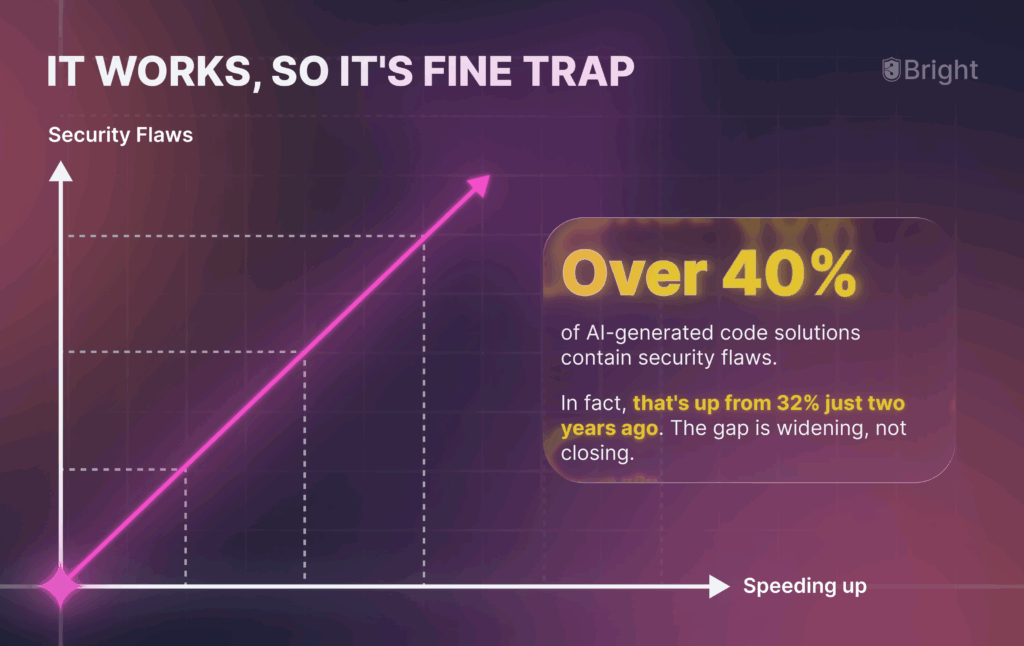
In the StackOverflow 2023 survey, over 82% of the respondents currently use AI tools to write code, and 42% answered that they trust the accuracy of the output, while 31% are on the fence.

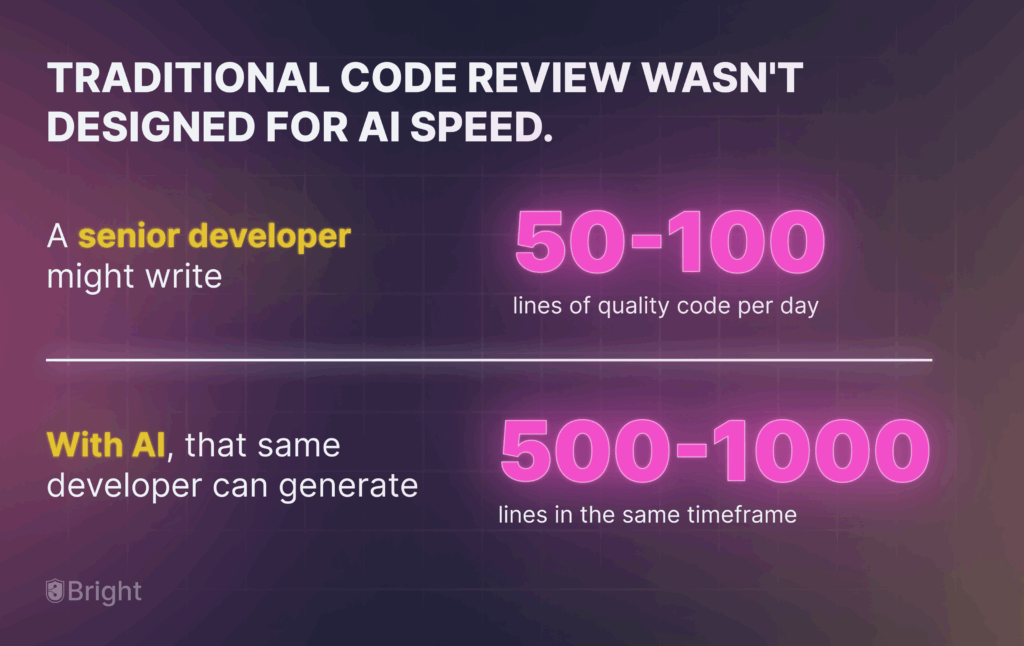
According to Gartner, 75% of enterprise software engineers are expected to use AI coding assistants by 2028. Thus, we can expect that not only will code and release velocity increase but that organizations’ overall code volume will also increase. 

Enter AI-generated security vulnerabilities on steroids 

First, let’s differentiate between LLM security issues and LLM-generated software or application security issues.

  • LLM security vulnerabilities are manipulations of a deployed LLM, say in an AI-powered chatbot on your website, to get it to provide access to restricted data or operations. Typically, prompt engineering and guardrails will be applied here to test and safeguard the model, but this should also be tested on the application level. 
  • LLM-generated software or application security vulnerabilities include code, web, API, and business logic security vulnerabilities. 

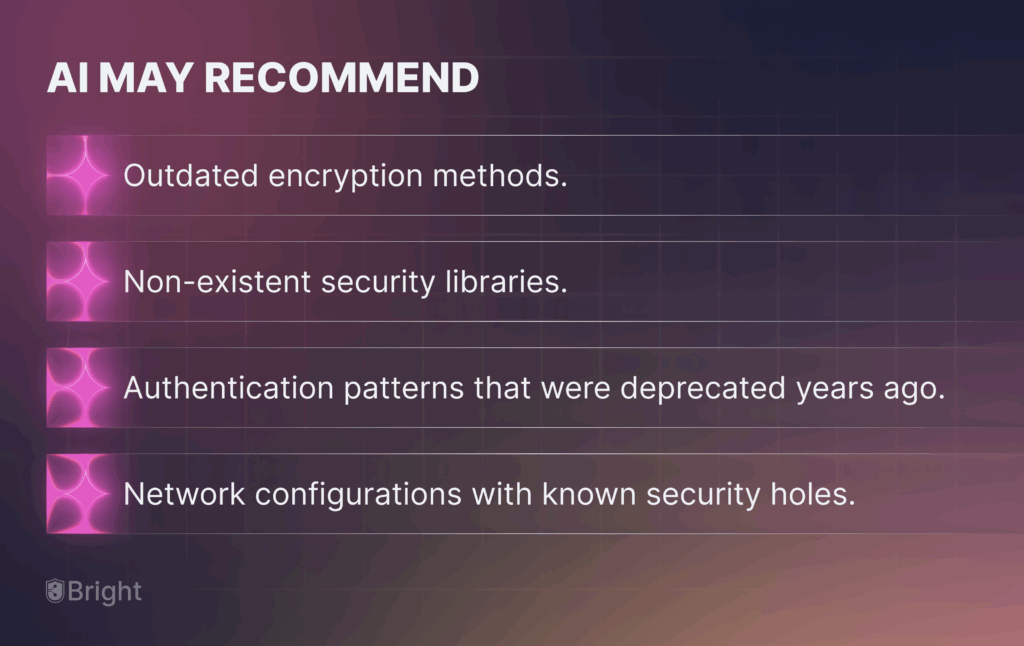
In the case of code generation, most vulnerabilities will fall under LLM-generated software or application security vulnerabilities, but AI-generated code is 4X more prone to security vulnerabilities, according to Gartner. With the overall volume of code only increasing, this is further compounding existing issues such as security testing happening too late in the SDLC and the need for more shift-left testing, developers working in different tools than AppSec, and not always having the necessary security knowledge needed to resolve security vulnerabilities. 

This is where Bright’s security unit testing extension comes into play. 

Bright for Copilot 

Bright’s LLM-powered security unit testing extension for GitHub Copilot helps organizations accelerate code generation without introducing security vulnerabilities. It puts DAST in the hands of developers at the IDE and unit testing levels, letting them leverage security testing from the get-go without having to become security gurus.

Emerging security threats in AI-generated code

AI-generated code will not be going anywhere. On the contrary, developers are already using it in mass in individual plans, if not organizational settings. If history teaches us anything, it is that when developers adopt engineering tools from the grassroots, it is only a matter of time before they make it into the enterprise. The benefits for both are abundantly clear, greater productivity and velocity. 

That said, AI-generated code is a brand new attack surface that modern enterprises need to evaluate and safeguard. That is why Bright is developing extensions and capabilities geared to empower developers to do security testing throughout their SDLC and across new evolving attack surfaces.

Vulnerability Scanners: 4 Key Features, Types, and How to Choose

Table of Content

  1. What Is a Vulnerability Scanner? 
  2. Key Features of Vulnerability Scanners 
  3. Types of Vulnerability Scanners 
  4. How to Choose a Vulnerability Scanner Tool 

What Is a Vulnerability Scanner? 

A vulnerability scanner is a specialized software tool designed to assess the security of computers, networks, or applications by automatically detecting and analyzing weaknesses. These scanners proactively search for security vulnerabilities, such as unpatched software, misconfigurations, and other security gaps that could be exploited by attackers. Some scanners can simulate the actions of an attacker to help identify exploitable vulnerabilities.

Vulnerability scanners are essential in the cybersecurity toolkit, providing ongoing insight into the security health of IT environments. They leverage extensive databases of known vulnerabilities and use various techniques, including port scanning and version checks, to detect security risks. By deploying and regularly using these scanners, organizations can patch vulnerabilities, fortify their defenses, and comply with regulatory requirements, minimizing the risk of cyber threats.

This is part of a series of articles about application security testing

In this article:

Key Features of Vulnerability Scanners 

Here are some of the key capabilities of modern vulnerability scanners:

1. Automated Discovery

Vulnerability scanners can identify every device on your network – be it servers, workstations, printers, or routers – and create an inventory of all your assets. This is the first step in securing your network; knowing what needs protection.

Automated discovery can provide insights into the makeup of your network, which can be highly dynamic, with new devices connecting and disconnecting. By maintaining an up-to-date inventory, you’re laying the groundwork for thorough security management.

Continuous discovery also ensures that no rogue or unauthorized device goes unnoticed. In the event a new, unfamiliar device appears on your network, the vulnerability scanner can identify it and enable you to take action.

2. Vulnerability Detection

Once the automated discovery has mapped out your network, the scanner can start detecting vulnerabilities. It meticulously examines each asset for known vulnerabilities, comparing your systems against databases of known security issues, such as the Common Vulnerabilities and Exposures (CVE). 

The detection process might look for misconfigurations, outdated software, missing patches, and other flaws that could be exploited. Different vulnerability scanners might address different types of vulnerabilities.

3. Risk Assessment

Next, vulnerability scanners prioritize the detected vulnerabilities based on the risk they pose to your organization. This assessment takes into account the severity of the vulnerability, the importance of the affected system, and the potential damage that could be caused if it were to be exploited. This prioritization allows you to focus your efforts on patching the most critical vulnerabilities first, ensuring the most effective use of your resources.

4. Reporting

Finally, vulnerability scanners generate detailed reports. These reports provide you with a clear view of your security posture, outlining the vulnerabilities detected, their risk levels, and recommendations for remediation.

These insights are invaluable for IT teams, executives, and even regulatory bodies that require proof of compliance with security standards. The analytics help track your progress over time, showing how your security posture has improved with each scan and remediation effort.

Types of Vulnerability Scanners 

Network Vulnerability Scanners

Network vulnerability scanners can inspect your entire network infrastructure – from servers and workstations to switches and firewalls – for vulnerabilities that could be exploited by attackers.

Network scanners can identify weak points in your network’s defenses, such as open ports, insecure network protocols, and services that should not be exposed to the public internet. These scanners are typically used as a first line of defense, providing a wide-angle view of your organization’s vulnerability landscape.

Web Application Vulnerability Scanners

Web application vulnerability scanners are crucial for identifying security weaknesses in websites and web applications. These scanners come in two main types: static application security testing (SAST) tools and dynamic application security testing (DAST) tools. 

SAST tools, or static scanners, analyze source code or compiled versions of code to identify vulnerabilities without executing the program. This approach allows developers to find and fix security issues early in the software development lifecycle. SAST tools are effective in detecting vulnerabilities related to code quality, such as cross-site scripting (XSS) and SQL injection, before the application is run.

DAST tools assess applications in their running state, mimicking an attacker’s approach to identify security flaws. This dynamic analysis is performed from the outside, scanning web applications for vulnerabilities without access to the source code. DAST tools are particularly useful for detecting runtime and environment-related vulnerabilities, such as authentication and session management issues, which are not visible until the application is running. 

Learn more about Bright Security’s Dev-Centric DAST

Container Vulnerability Scanners

With the rise of containerization technologies like Docker and Kubernetes, container vulnerability scanners have become increasingly important. These scanners specialize in finding vulnerabilities within container images and container management platforms.

Containers are a popular way to package and deploy applications, but they also introduce a new set of security challenges. If a container image has vulnerabilities, they can be propagated across numerous instances, leading to widespread security risks.

Container vulnerability scanners examine the layers within container images for known vulnerabilities and misconfigurations, ensuring that your containerized applications are not introducing risks into your environment.

Related content: Read the guide to container security

Cloud Vulnerability Scanners

Lastly, with the shift toward cloud computing, cloud vulnerability scanners have emerged to address the unique challenges of cloud environments. These scanners assess the security posture of your cloud infrastructure, including compute instances, storage, and network configurations.

Cloud environments are dynamic and scalable, which introduces complexities in maintaining a secure state. Cloud vulnerability scanners need to work hand-in-hand with cloud service provider APIs to provide visibility into the security of cloud resources.

How to Choose a Vulnerability Scanner Tool 

Assess the Complexity and Scale of your IT environment

The complexity and scale of your environment will significantly influence the type of vulnerability scanner you require. Start by cataloging the types of devices, systems, and applications within your ecosystem. Do you have a mix of operating systems? Are there any legacy systems or bespoke applications? How extensive is your web presence? Answering these questions will give you a blueprint of the necessary capabilities your vulnerability scanner must possess.

Furthermore, consider the pace at which your IT environment evolves. Fast-changing environments with frequent deployments may need scanners that can keep up with continuous integration/continuous deployment (CI/CD) pipelines and agile methodologies. In contrast, more stable environments might be well-served by scheduled scans.

Choose the Deployment Model

There are two common deployment models for vulnerability scanning solutions:

  • On-premises: An on-premises vulnerability scanner resides within your local infrastructure. This model offers you complete control over the scanning process and the data it generates.
  • Cloud-based: A cloud-based vulnerability scanner is operated by a service provider. This option can be more scalable and cost-effective, especially for businesses without the resources to manage and maintain on-premises software. Cloud scanners are also easier to update with the latest threat intelligence due to their centralized nature.

Your selection here will depend on factors such as regulatory compliance, data sensitivity, resource availability, and scalability requirements. In addition, if your infrastructure is primarily in the cloud, a cloud-based scanner might be a natural choice.

Consider the Scanner’s Accuracy

The precision with which a vulnerability scanner identifies and categorizes potential threats is a core consideration. False positives, where benign items are mistakenly flagged as threats, can waste valuable time and resources. Conversely, false negatives – actual vulnerabilities that go undetected – can leave your systems exposed to attacks.

Investigate the scanner’s track record for accuracy by seeking out reviews, case studies, and independent evaluations. These resources can provide insights into how well the scanner performs in real-world environments. You should also consider the scanner’s ability to adapt to new threats.

Ensure the Scanner Integrate with Existing Security and IT Tools

Integration is a crucial aspect of any vulnerability scanner. When a scanner integrates seamlessly with your tools, it can provide richer contextual insights, ease remediation, and even help automate responses to detected vulnerabilities.

Look for scanners that offer robust APIs or out-of-the-box integrations with widely used security information and event management (SIEM) systems, patch management tools, and other critical IT management solutions. This connectivity enables you to create a cohesive and responsive security infrastructure.

Learn more about Bright security’s dynamic vulnerability scanning

What Is CSRF Token Mismatch and 6 Ways to Fix It

Table of Content

  1. What Is CSRF?
  2. What Does CSRF Token Mismatch Mean? 
  3. Example of CSRF Token Mismatch: Laravel API
  4. 6 Ways to Solving the “CSRF Token Mismatch Error” 

What Is CSRF?

Cross-Site Request Forgery (CSRF) is a web application attack that forces an end user to execute unwanted actions on a web application in which they’re authenticated. CSRF attacks specifically target state-changing requests, not theft of data, since the attacker has no way to see the response to the forged request.

With a little bit of social engineering, such as sending a link via email or chat, an attacker may trick the users of a web application into executing actions of the attacker’s choosing. If the victim is a normal user, a successful CSRF attack can force the user to perform state changing requests like changing their email address or password. If the victim is an administrative account, CSRF can compromise the entire web application.

What Does CSRF Token Mismatch Mean? 

CSRF tokens are random, unique values associated with a user’s session. They are used to verify that requests and submissions made to a particular website originated from that site. The CSRF token mismatch error occurs when the CSRF token in a user’s session doesn’t match the one sent with their request.

Consider a user visiting a website which is protected against CSRF attacks by using CSRF tokens. Every time the user sends a request or submits data, the website checks that the CSRF token sent with your request matches the one associated with your session. If these tokens don’t match, it’s a CSRF token mismatch, and the website will return an error, potentially preventing the user’s request from going through. There are two possibilities:

  • The user is experiencing a CSRF attack: In this case, the CSRF token mismatch error can effectively block the attack.
  • The user is not experiencing a CSRF attack: This is the more common case, and this means the CSRF token mismatch error is a technical issue, which needs to be resolved to avoid hurting the user experience.

Related content: Read our guide to CSRF attack

Example of CSRF Token Mismatch: Laravel API

Laravel, a popular PHP framework for web application development, provides in-built CSRF protection. Laravel’s CSRF middleware automatically generates a CSRF token for each active user session managed by the application. This token is stored in the user’s session data and also embedded in HTML forms as a hidden field or added to the header of AJAX requests.

Laravel requires that every POST, PUT, PATCH, and DELETE request includes the CSRF token. It automatically checks this token against the one stored in the session. If they don’t match, Laravel throws a TokenMismatchException.

Here are the most common causes of a CSRF token mismatch error in Laravel:

  • Session timeout: If the user’s session expires due to inactivity, the CSRF token stored in the session is no longer valid. Any subsequent requests with the old CSRF token will result in a mismatch.
  • Form page caching: If a form page is cached, the CSRF token embedded in the form might be outdated by the time the user submits the form.
  • AJAX requests: For AJAX requests, if the CSRF token is not included in the request headers or is outdated, it will cause a mismatch.
  • Configuration issues: Incorrect configuration of session or middleware settings in Laravel can lead to improper handling of CSRF tokens.

And here are a few quick solutions:

  • Refreshing CSRF token: For session timeout issues, ensure that the CSRF token is refreshed when a new session is created. You can use the csrf_field() helper function in forms and include the CSRF token in AJAX request headers.
  • Disabling caching for forms: To prevent outdated CSRF tokens in cached forms, set appropriate cache-control headers to prevent caching of form pages.
  • Handling AJAX requests: Ensure that AJAX requests include the CSRF token in the request headers. This can be automated by setting a common header with the CSRF token for all AJAX requests in your JavaScript code.
  • Configuring sessions and middleware: Review Laravel’s session and middleware configurations to ensure they are set up correctly. Pay attention to session lifetime and the order of middleware in the kernel.php file.

6 Ways to Solving the “CSRF Token Mismatch Error” 

We cannot cover specific solutions to the CSRF token mismatch error in all possible web applications. However, here are a few general approaches that can help resolve the problem.

1: Check if the CSRF Tokens are Actually Mismatched

First thing, it is important to ensure that the CSRF tokens from the client and server are indeed mismatched. This verification can be done by logging both tokens and comparing them.

Remember, CSRF tokens are usually generated for each session or form, and they should be unique. When a form is submitted, the server compares the CSRF token sent with the request against the one stored in the session. If they do not match, you will encounter the CSRF token mismatch error.

In case the tokens are not mismatched, the problem may lie elsewhere. If they are, you’ve identified the problem and can proceed to one of the solutions below.

2. Clear Cookies from the Browser

Sometimes, the solution can be as simple as clearing cookies from the browser. Old or corrupted cookies can cause a CSRF token mismatch error.

To clear cookies, go to your browser settings and find the option to clear browsing data or cookies. Once the cookies are cleared, try to perform the action that was causing the error again.

Remember, while clearing cookies can solve the issue temporarily, it may not be a permanent fix if the problem lies elsewhere in your code or application setup.

3. Make Sure CSRF Tokens are Generated and Passed Correctly

After confirming a CSRF token mismatch, the next step is to make sure the tokens are generated and passed correctly. The generation of CSRF tokens is usually handled by your web framework. However, you need to ensure they are included in your forms or AJAX requests.

Check your form to ensure that it includes a CSRF token. If you’re using AJAX requests, make sure the CSRF token is included in the request header. This process is crucial because even if the server generates a CSRF token, it won’t be able to verify the request if the client doesn’t send one.

4. Check if the Session and CSRF Token Has Expired

Another common cause of a CSRF token mismatch is an expired session or CSRF token. Most web applications are designed such that CSRF tokens expire after a period of inactivity, which is a good practice for security reasons.

To check if this is the case, look at the expiration time of your sessions and CSRF tokens. If the user was inactive for longer than this period, their session or CSRF token may have expired.

If you find that tokens are expiring too quickly, causing inconvenience to your users, you may want to consider lengthening the expiration time. However, remember to strike a balance between user convenience and application security.

5. Check for JavaScript Errors in the Console

Sometimes, the issue could stem from a JavaScript error. If your application relies heavily on JavaScript, an error could prevent the CSRF token from being included in requests.

To check for JavaScript errors, open your browser’s console and look for any red error messages. Debug and fix any errors you find.

6. Consider Using Double Submit Cookies as an Additional Check

Double submit cookies present another layer of security. In this method, the server sends a CSRF token as a cookie alongside the regular CSRF token. When a request is made, the server checks both the CSRF token and the cookie values to detect a mismatch.

This approach can help identify a CSRF token mismatch error by providing an additional check. However, it should be used as an added layer of security and not a replacement for other necessary checks.

Application Mapping: A Key to Securing Critical Business Applications

In the intricate web of modern business technologies, securing critical applications is paramount. Application mapping emerges as a vital tool in this context, offering numerous benefits for enhancing application security.

Application mapping, in the context of information technology and cybersecurity, refers to the process of creating a detailed inventory of an organization’s software applications and their interactions. This involves identifying and documenting various components of the applications, such as servers, databases, external services, and APIs, as well as understanding how they communicate and interconnect. 

Application mapping is crucial for organizations to comprehend their IT infrastructure’s complexity, manage dependencies, ensure efficient performance, and identify potential security vulnerabilities within their application ecosystem. This comprehensive understanding aids in effective IT management, strategic planning, and bolstering security measures against potential threats.

Let’s delve into the five key security advantages that application mapping provides.

1. Enhanced Visibility and Control

Application mapping offers a comprehensive view of an organization’s application landscape. By delineating how applications interact, the data they utilize, and their interdependencies, organizations gain critical insights. This enhanced visibility is not just operationally beneficial but pivotal for security. It enables the identification of potential security vulnerabilities within the application ecosystem, allowing organizations to take proactive steps to address them. Moreover, with greater control over the application environment, organizations can manage their applications more effectively and securely, ensuring a fortified defense against potential threats.

2. Improved Compliance and Risk Management

In today’s regulatory landscape, adherence to industry-specific standards is a major concern for businesses. Non-compliance can lead to significant financial penalties and reputational harm. Application mapping can be a powerful ally in ensuring compliance. By providing a detailed overview of the application landscape, it highlights areas that may not align with current security standards or regulations, such as applications using outdated protocols. This facilitates timely remediation to maintain compliance.

Risk management also benefits from application mapping. Understanding the application ecosystem in its entirety allows for a more accurate assessment of potential risks and the development of targeted mitigation strategies, enhancing the organization’s overall security posture.

3. Efficient Incident Response and Recovery

In the event of a security breach, rapid response is crucial to minimize damage. Application mapping significantly enhances an organization’s ability to respond to and recover from security incidents. With a clear map of the application ecosystem, affected applications and their dependencies can be swiftly identified, isolating the breach and preventing further system infiltration. This knowledge is invaluable in guiding recovery efforts, ensuring applications are restored systematically to reduce downtime and operational impact.

4. Identifying Anomalies and Potential Threats

Early detection of anomalies and threats is critical in preventing security breaches. Application mapping aids in establishing a baseline for normal application behavior and interactions. Deviations from this baseline can signal potential security issues. For example, unexpected communication between an application and an external server might indicate a compromise. A detailed application map is instrumental in detecting such anomalies, enabling quick and effective responses to emerging threats.

5. Data Protection and Privacy Enhancement

In an era where data breaches are rampant and data protection regulations are stringent, safeguarding data privacy is more crucial than ever. Application mapping enhances an organization’s ability to protect data. By tracing data flow within the application ecosystem, organizations gain clarity on data storage, usage, and access. This aids in pinpointing potential data leakage points and implementing necessary security measures. Additionally, understanding data flow is essential for compliance with regulations like the GDPR, helping organizations avoid hefty fines and reputational damage.

Implementing Application Mapping

Here’s a comprehensive guide on how to successfully implement application mapping in an organization:

Setting Clear Objectives and Establishing Scope: 

  1. Defining Goals: Begin by pinpointing what you aim to achieve through application mapping. This could range from enhancing application performance, minimizing downtime, to streamlining IT operations.
  2. Determining the Scope: Identify the applications to include in your mapping. Will it be limited to critical applications or encompass the entire suite across your organization? This decision hinges on your defined goals and available resources, and it’s crucial for guiding the subsequent steps of the process.

Comprehensive Inventory of Current Applications: 

  1. Cataloging Your Applications: Create an exhaustive inventory of all applications in use. Detail each application’s purpose, user base, and dependencies. This step is pivotal in offering a transparent view of your current application ecosystem, laying the groundwork for identifying areas of improvement and potential integration challenges.

Mapping Inter-Application Dependencies: 

  1. Understanding Interactions: With your inventory at hand, the next phase is to untangle and map out how each application interacts within your network. Leveraging application mapping tools can automate and streamline this process.
  2. Revealing Complexity: This step uncovers the intricacies of your application network. It helps in comprehending how alterations in one application might ripple through others, aiding in more efficient management and reducing risks associated with changes.

Visual Representation of Your Application Landscape

  1. Creating a Visual Blueprint: Transform your data into a visual map of your application network. This visualization should capture the network’s structure at various levels, providing insights into its complexity and interconnectivity.
  2. Insights and Overview: This visual guide is not just a technical asset but a communication tool. It highlights potential bottlenecks and vulnerabilities, flags optimization opportunities, and offers stakeholders an accessible overview of your IT ecosystem.

Conclusion

As the reliance on applications continues to escalate in the business world, recognizing and addressing their security vulnerabilities becomes a non-negotiable aspect of organizational strategy. Application mapping offers an in-depth analysis of the risks inherent in application ecosystems and provides actionable strategies to strengthen their security frameworks. It’s not merely about mitigating risks; it’s about reshaping the security paradigm to align with the evolving digital environment. By prioritizing application mapping, businesses can significantly lower the threat landscape and ensure that their applications are not just operational but also secure and compliant. In a landscape where digital agility is intertwined with security, application mapping is not just a tool – it’s an imperative.

Penetration Testing Tools: 10 Tools to Supercharge Your Pentests

What are Penetration Testing Tools?

Penetration testing (pentesting) is a simulated attack launched for the purpose of uncovering security vulnerabilities. A pentest helps organizations discover security gaps, using a realistic simulation of a cyber attack, which does not cause damage or expose sensitive data. There are several tools available for this purpose:

  • Bright Security is an advanced penetration testing tool based on the dynamic application security testing (DAST) approach, which uses artificial intelligence to identify complex security vulnerabilities traditional methods might miss. 
  • Metasploit can perform vulnerability scanning, listening, and evidence collection, making it a good choice for pentesters who manage multiple companies or applications.
  • Kali Linux is a pentesting operating system including multiple powerful tools, including sniffing and injecting, password cracking, and digital forensics.
  • Burp Suite offers both a free community edition and a commercial professional edition, and is a versatile web application security testing tool. 
  • Nmap is capable of scanning a single IP, port, or host to a range of IPs, ports, and hosts, and can also identify services that are running on hosts. 
  • Sqlmap, with its testing engine and multiple modes of injection attacks, is good for detecting injection flaws, but may be limited in detecting other vulnerabilities. 
  • Wireshark, an open-source tool, analyzes network traffic in real-time and can show which systems and protocols are live in a network.
  • Zed Attack Proxy (ZAP) is a free and libre software that sits between your browser and the website you’re testing.
  • Nessus can examine a target machine, identify running services, and provide a list of detected vulnerabilities. 
  • Aircrack-ng is designed specifically for cracking flaws within wireless connections.
  • Nikto, an open source web server scanner, performs comprehensive tests against web servers. 

Other notable penetration testing tools include Cain and Abel, CANVAS by Immunity, John the Ripper, Kali Linux, Struts-Scan, and W3af.

Related content: read our guide to penetration testing services

In this article, you will learn:

Penetration Test Phases

The penetration testing process usually occurs in five stages. In each of these stages, penetration testers use tools to automate data gathering and exploitation of organizational resources.

  1. Planning and reconnaissance—the pentester defines the goal and scope of the test. To properly plan the test, the pentester gathers intelligence, which can help in better understanding how a targeted environment works and discover its potential weaknesses.
  2. Scanning—helps the pentester to better understand how the targeted application might respond to various intrusion attempts. The pentester may use either static or dynamic analysis to access a network.
  3. Gaining access—the pentester uses several pentesting techniques, such as SQL injection and cross-site scripting (XSS), to detect vulnerabilities.
  4. Maintaining access—the pentester tries to understand if a cybercriminal can exploit weakness, achieve persistent presence in the system, and gain more access.
  5. Analysis—the pentester compiles the results of the penetration test into a detailed report. The report usually specifies the vulnerabilities that were exploited, the time spent undetected within the system, the sensitive data that was accessed, and more.

Types of Penetration Testing Tools

There is a wide range of tools you can use when running a pentest, each providing different capabilities. Here are the most commonly used penetration testing tools:

  • Port scanners—can locate potential attack vectors during the reconnaissance phase. A port scanner can detect open ports, which provide insight into operating systems (OS) and applications running with network access. 
  • Vulnerability scanners—can identify known application vulnerabilities and configuration errors. A pentester can use the report generated by a vulnerability scanner to identify an exploitable vulnerability for initial access. 
  • Network sniffers—can collect and analyze network traffic. A pentester can use a network sniffer to locate active applications and then look for sensitive data or exposed credentials moving through the network.
  • Web proxy—can help pentesters intercept and change traffic flowing between the pentester’s browser and the web server of the organization. The goal is to find and exploit HTML application vulnerabilities, which enable the tester to launch attacks like XSS and cross site request forgery (CSRF).
  • Password cracker—can help pentesters identify weak passwords within the network. Attackers use password hashes to expand or elevate their privileges levels. A password cracker helps pentesters determine if weak passwords are putting the network at risk.

Related content: read our guide to web application penetration testing

Top 10 Pentesting Tools

Here are ten of the best and most commonly used tools used in penetration tests.

Bright Security

Bright provides a penetration testing platform powered by artificial intelligence (AI). It lets organizations automate and scale the detection of vulnerabilities, including zero-day attacks, business logic weaknesses, and known vulnerabilities.  

Bright automatically scans multiple layers of your environment and provides comprehensive reports, guaranteed to be free of false positives, on par with reports provided by manual penetration testers.

Metasploit

Metasploit is a popular open source framework for penetration testing. The tool lets you pass a code that breaches a system, and then runs a payload that performs actions on a target machine. Metasploit is often used for manual brute force attacks and website pentesting.

You can use Metasploit on various environments, including servers, applications, and networks. It comes with a clickable graphical user interface (GUI), which works on Linux, Microsoft Windows, and Apple Mac OS.

Burp Suite

Burp Suite is a comprehensive web vulnerability scanner, which supports both automated and manual testing of web applications. It includes tools for mapping out application contents, analyzing requests and responses, and identifying security flaws. 

The professional edition offers features like automated scanning, intruder attacks, and the ability to save and resume sessions. Its user-friendly interface and powerful testing capabilities make it a favorite among security professionals.

Kali Linux

Kali lets you configure customized backup and recovery schedules, but it works only on Linux. Kali offers the use of several tools, curated to help you perform many penetration testing tasks, including sniffing and injecting, password cracking, and digital forensics. Kali is offered under the open source license, and can be integrated with Metasploit and Wireshark.

Nmap

Nmap (Network Mapper) is a free and open-source utility for network discovery and security auditing. It is used to discover hosts and services on a computer network by sending packets and analyzing the responses. 

Nmap provides a variety of features for probing computer networks, including host discovery, port scanning, version detection, and OS detection. It is a versatile tool that can be used for a range of network-related tasks, from inventorying the network to monitoring host or service uptime to network security auditing.

Sqlmap

Sqlmap is an open source tool that provides automation capabilities for detecting and exploiting SQL injection vulnerabilities. The tool provides password cracking capabilities, and lets you execute arbitrary code commands. It supports six SQL injection techniques and lets you directly connect to a database without having to pass through the injection. 

WireShark 

Wireshark is a network packet analyzer that captures live traffic and enables offline analysis. It supports most operating systems including Linux, Windows, Solaris, and FreeBSD. It provides both a graphical user interface and terminal interface. 

WireShark can analyze VoIP traffic, read live data from protocols like PPP/DLC, bluetooth and ATM, decompress compress files on the fly, and decrypt transmission encrypted by protocols like IPSec and WPA/WPA2.

Zed Attack Proxy (ZAP)

ZAP is an open source vulnerability scanner for web applications. It can perform passive scanning, or simulate attacks on applications to discover security weaknesses. ZAP can identify open ports, perform brute force search on files or directories, crawl to discover the structure of a site, and supply random inputs (fuzzing) to test if the website crashes or behaves unexpectedly.

Nessus

Nessus is one of the most widely used vulnerability scanning tools in the cybersecurity field. Developed by Tenable Network Security, it is known for its robust detection of vulnerabilities and misconfigurations in networks and systems. 

Nessus scans for known vulnerabilities, misconfigurations, and provides detailed remediation reports. Its continuously updated vulnerability database makes it effective in identifying the latest threats and compliance issues.

Aircrack-ng

Aircrack-ng is a suite of tools for assessing WiFi network security. It focuses on different areas of WiFi security: monitoring, attacking, testing, and cracking. With its ability to capture network packets and analyze them, Aircrack-ng can be used to recover lost keys of Wi-Fi networks, assess their security, and understand the strategies used by attackers to breach wireless networks.

Nikto

Nikto is an open-source web server scanner which performs comprehensive tests against web servers for multiple items, including over 6700 potentially dangerous files/programs, checks for outdated versions of over 1250 servers, and version-specific problems on over 270 servers. It also checks for server configuration items such as the presence of multiple index files and HTTP server options, and will attempt to identify installed web servers and software.

Penetration Testing with Bright

Bright goes far beyond finding the OWASP Top 10 technical vulnerabilities in your applications and APIs. With more than 7,000 payloads Bright’s AI powered engine automatically detects a long list of known vulnerabilities and unknown Zero-Day and Business-Logic Flow vulnerabilities. 

This significantly reduces lengthy and costly manual testing, saving you time and money with False Positive free reporting and remediation guidelines. Bright is also built for automation. It seamlessly integrates into your SDLCand provides false-Positive Free reports generated in real-time, with pinpoint code instrumentation, empowering the highest security standards, without losing development speed or agility.

Learn more about Bright

An Introduction to Software Supply Chain Attacks

The alarming rise in Software Supply Chain (SSC) attacks has catapulted this issue into a hot topic in the cybersecurity landscape. A staggering 742% increase in these attacks over the past three years, as reported by CSO Magazine, underscores the urgency for organizations to address this escalating threat. SSC attacks continue to be newsworthy with notable examples of software supply chain attacks including SolarWinds, Home Depot, and NotPetya incidents.

In response to this heightened risk, businesses are redoubling their efforts to implement robust safeguards against SSC attacks. Concurrently, leading industry organizations are continually releasing targeted guidance aimed at assisting enterprises in fortifying their software supply chains against potential breaches.

What is the Software Supply Chain?

To fully grasp the nature of a supply chain attack, it is important to understand the contemporary landscape of application development. Gone are the days when applications were monolithic entities, crafted entirely in-house from the ground up. Modern application development is more akin to assembling a complex mosaic, where each piece—a library here, a framework there, complemented by various web services and databases—comes together to form a functional and efficient whole.

This modular approach allows developers to accelerate the development cycle, reusing code that has been proven effective, and focusing their efforts on innovating rather than reinventing the wheel. However, this interconnectedness also brings to light a new set of complexities. Each component integrated into an application may itself be constructed from other subcomponents, creating a nested hierarchy of dependencies.

Take the widely used Log4J logging library within the Apache framework as a case in point. When a critical vulnerability within Log4J was uncovered, it cascaded through the ecosystem, impacting any and all applications that relied on it, illustrating just how pervasive and profound the effects of a single weakness can be.

The modern, layered approach to building applications enables rapid development and innovation. Yet, it simultaneously introduces a systemic risk: if any single component in the network of dependencies is compromised, the entire structure can be at risk, making it imperative for developers to diligently manage and monitor these interdependencies.

What is a Software Supply Chain Attack? 

Supply chain attacks strategically focus on infiltrating an organization by compromising the products, in this case the software that the targeted entities depend on. In this type of cyber-assault, attackers covertly implant a backdoor within the software or its development infrastructure. Once established, this concealed entry point grants them the ability to tamper with the software’s update and patching mechanisms. They exploit this capability to deliver “trojanized” updates—updates that appear legitimate but are laced with malicious code. 

When the unsuspecting organization applies these tainted updates, they unknowingly open the floodgates for an array of cyber threats. This can include sophisticated malware intrusions, ransomware attacks, and even advanced persistent threats (APTs) that lurk stealthily within the network, gathering intelligence or waiting for an opportune moment to strike. 

The insidious nature of software supply chain attacks makes them particularly dangerous, as they abuse the inherent trust organizations place in their software suppliers and the updates they provide. This makes it all the more imperative for organizations to diligently scrutinize their software supply chain for potential vulnerabilities.

Historically, supply chain attacks have referred to attacks against trusted relationships, in which an unsecure supplier in a chain is attacked in order to gain access to their larger trading partners. This is what happened in the notorious 2013 attack against Target, where the threat actor gained access to an HVAC contractor in order to enter Target’s systems.

What Are the Types of Attacks?

Software supply chain threats include, but are not limited to:

  • Malicious code injection: Insert malicious code into the software during the development or distribution stage leading to serious security breaches and data theft.
  • Tampering with updates: Attackers can modify software updates to include malicious code compromising the security of the software and leading to data theft.
  • Unauthorized access to the code repository: Attackers can gain access to the code repository and make changes to the software code, leading to security vulnerabilities.
  • Compromised third-party libraries: An attacker may gain access to the code repository and make changes to the software code.

What Can Be Done to Prevent Attacks?

Preventing supply chain security attacks involves implementing various security measures throughout the software development lifecycle, from design to deployment and upgrades. Here are some steps that can be taken to prevent attacks on your software supply chain:

  • Establish security policies and standards: Access control, authentication, data validation assessment, and protection.
  • Verify the integrity of software: Digital signatures, checksums, or other methods.
  • Secure build environment: Secure build system access, secure software repositories, scan-build artifacts, and images for vulnerabilities.
  • Run security assessments: Analysis to identify vulnerabilities and weaknesses in the software, including static and dynamic code analysis and vulnerability scanning.
  • Use trusted sources: Use trusted sources for software and components, such as official repositories, verified vendors, and licensed and verified versions.
  • Implement security controls: Use firewalls, intrusion detection systems, and access controls to protect against attacks.
  • Monitor and respond to security incidents: Monitor vulnerabilities and security incidents and respond quickly to any incidents to minimize the impact.
  • Foster a security culture: Easy-to-use tools for training employees on secure coding practices, password management, content analysis, and incident response.

Summary 

Defending against software supply chain attacks is of paramount importance due to their ability to stealthily compromise widespread systems through a single point of vulnerability. As software increasingly relies on a complex network of third-party components and services, the risk surface expands, making it crucial to ensure that each element within the supply chain is secure. These attacks can lead to significant data breaches, operational disruptions, and loss of customer trust, affecting not just individual organizations but also the broader ecosystem that relies on the integrity of the software supply chain. 

Effective defense against these threats requires rigorous security practices, including thorough vetting of third-party components, continuous monitoring for anomalies, and swift incident response protocols. By safeguarding the supply chain, organizations can protect their assets, maintain compliance with regulations, and uphold their reputations in an increasingly interconnected digital landscape.

Data Breaches: Causes, Compliance Impact, and Best Practices

What Is a Data Breach? 

A data breach is an incident where unauthorized individuals gain access to confidential data stored in a system. This data can include personal information such as credit card numbers, social security numbers, or corporate information like trade secrets and intellectual property.

Some data breaches are orchestrated by cybercriminals intending to exploit the data for malicious purposes. This could involve selling the data on the dark web, holding it ransom, or using it for identity theft. However not all data breaches are carried out by hackers. For example, some occur due to human error or insider threats.

In essence, a data breach represents a violation of trust and security. It can disrupt an organization’s operations, irreparably hurt its reputation, and in regulated industries, can result in compliance violations and legal problems. This is why every organization must have a strategy for preventing and mitigating data breaches.

This is part of a series of articles about information security.

In this article:

Consequences of a Data Breach 

The consequences of a data breach can be far-reaching, affecting not just businesses but also individuals and society at large:

Financial Implications for Businesses

A data breach can have severe financial implications for businesses. These include the immediate costs associated with the breach’s detection and containment, investigation, and recovery. However, the financial repercussions of a data breach extend beyond these immediate costs.

Businesses might also face financial losses due to business disruption and lost sales. Moreover, there is the looming threat of lost business opportunities and contracts due to damaged trust and reputation. In some cases, businesses may also need to compensate affected customers, adding to the overall financial burden.

Data breaches can also result in legal and regulatory penalties. Depending on the jurisdiction and the nature of the data compromised, companies may face hefty fines and sanctions. For instance, under the General Data Protection Regulation (GDPR) in the European Union, businesses can be fined up to 4% of their annual global turnover for serious data breaches.

Moreover, companies may also face lawsuits from affected customers or employees. These legal battles not only result in financial losses but also consume valuable time and resources that could otherwise be invested in productive activities.

Learn more in our detailed guide to security breach.

Reputational Damage and Loss of Customer Trust

Perhaps the most devastating consequence of a data breach is the damage it does to a company’s reputation. Customer trust is a crucial business asset, and a data breach can erode this trust.

Customers entrust businesses with their personal and financial information, expecting that it will be kept safe. A data breach shatters this expectation, leading to a loss of customer trust. This can result in customers turning to competitors, leading to a decline in customer base and revenue.

Personal and Societal Impacts

Beyond businesses, data breaches also have significant personal and societal impacts. Individuals affected by a data breach may fall victim to identity theft, financial fraud, and other forms of cybercrime. This can lead to emotional distress, financial losses, and violation of privacy.

At a societal level, data breaches can undermine trust in digital platforms and systems. This could potentially hamper the adoption of digital services, slowing down the pace of digital transformation. Moreover, large-scale data breaches can even pose a threat to national security.

4 Causes of Data Breaches

There are four main ways in which data breaches can occur:

1. Cyberattacks

Cyberattacks are a common means by which data breaches occur. Hackers employ a variety of techniques to gain unauthorized access to data. These include phishing attacks, malware, ransomware, and denial of service attacks. These attacks exploit various weaknesses in a system’s security to steal, damage, or disrupt access to data.

2. Insider Threats

Insider threats refer to data breaches that occur due to the actions of an individual within an organization. This could be a disgruntled employee, a careless staff member, or even a malicious insider working for a competitor or a cybercriminal group. Insider threats can be particularly challenging to detect and prevent, given the level of access and trust these individuals often have.

3. Human Error

Human error is another significant cause of data breaches. This could involve employees accidentally sending sensitive information to the wrong recipient, leaving systems unsecured, or falling for phishing scams. Despite being unintentional, the impact of such breaches can be just as severe.

4. System Vulnerabilities

Lastly, system vulnerabilities often serve as a gateway for data breaches. These vulnerabilities could be due to outdated software, weak passwords, or lack of proper security measures. Hackers often exploit these weaknesses to gain access to a system and the data stored within.

Data Breach Requirements in Common Compliance Standards 

General Data Protection Regulation (GDPR)

The GDPR is a European Union regulation that provides individuals with more control over their personal data. It requires organizations to protect the privacy and integrity of data they hold about EU citizens, regardless of where the company is located.

Under the GDPR, organizations are required to report a data breach to the appropriate supervisory authority within 72 hours of becoming aware of it. They must also notify affected individuals without undue delay if the breach poses a high risk to their rights and freedoms. The notification should describe the nature of the breach, the likely consequences, and the measures taken to mitigate its possible adverse effects.

The GDPR imposes significant penalties for non-compliance. Organizations can face fines of up to 20 million Euros or 4% of their global annual revenue, whichever is higher, if they fail to comply with the regulation’s requirements. In addition, they may suffer reputational damage, legal action, and loss of consumer trust.

California Consumer Privacy Act (CCPA)

The CCPA is a state statute intended to enhance privacy rights and consumer protection for residents of California. Although it has a narrower scope than the GDPR, the CCPA has substantial implications for businesses that collect, store, and process personal information of California residents.

Under the CCPA, businesses are required to disclose their data collection practices and allow consumers to opt-out of the sale of their personal information. In case of a data breach, businesses have to notify affected consumers without unreasonable delay. The notification must include details about the breach, types of information compromised, and steps consumers can take to protect themselves.

Non-compliance with the CCPA can result in penalties of up to $7,500 per violation, not to mention potential lawsuits from affected consumers. Therefore, businesses need to ensure they have robust data security measures in place to prevent data breaches and comply with the CCPA requirements.

PCI DSS

The PCI DSS is a set of security standards designed to secure credit and debit card transactions against data theft and fraud. It applies to all entities that store, process, or transmit cardholder data.

The PCI DSS requires businesses to build and maintain a secure network, protect cardholder data, maintain a vulnerability management program, implement strong access control measures, regularly monitor and test networks, and maintain an information security policy. In the event of a data breach, businesses must immediately contain and limit the exposure of cardholder data. They also need to alert all necessary parties, including their acquiring bank, card brands, and a PCI Forensic Investigator.

Failure to comply with the PCI DSS can result in penalties ranging from $5,000 to $100,000 per month. Moreover, businesses may lose their ability to process card payments, face increased transaction fees, and suffer reputational damage.

Health Insurance Portability and Accountability Act (HIPAA)

HIPAA is a federal law that protects sensitive patient health information from being disclosed without the patient’s consent or knowledge. It applies to healthcare providers, health plans, healthcare clearinghouses, and business associates of these entities.

Under HIPAA, covered entities and their business associates must implement administrative, physical, and technical safeguards to ensure the confidentiality, integrity, and availability of protected health information. In case of a data breach, they must notify affected individuals, the Secretary of Health and Human Services, and in some cases, the media, within 60 days. The notification must include a brief description of the breach, the types of information involved, the steps individuals should take to protect themselves, and what the covered entity is doing to investigate the breach, mitigate harm, and prevent further breaches.

Non-compliance with HIPAA can result in civil penalties of up to $1.5 million per violation category, per year. Criminal penalties can go up to $250,000 in fines and ten years in prison. In addition, covered entities may suffer reputational damage and loss of patient trust.

Best Practices to Prevent Data Breaches 

Conduct Regular Risk Assessments

Regular risk assessments are crucial in identifying your organization’s vulnerabilities and taking corrective actions before a breach occurs. This involves identifying and categorizing assets, evaluating potential threats, assessing vulnerability, analyzing controls, and quantifying the potential impact.

Risk assessments should be conducted at least annually or whenever significant changes occur in the business environment, such as after a merger or acquisition, when launching a new product, or when adopting new technologies.

Use Strong Authentication Methods

Strong authentication methods, such as two-factor authentication (2FA) or multi-factor authentication (MFA), can provide an additional layer of security. These methods require users to verify their identity by providing two or more pieces of evidence or credentials.

Implementing a robust password policy is equally important. This includes using unique passwords, changing them regularly, and using password managers to store them securely.

Encrypt Sensitive Data

Encryption is the process of converting data into a code to prevent unauthorized access. Sensitive data such as customer information, payment details, and internal documents should be encrypted both when stored (at-rest encryption) and when transmitted over a network (in-transit encryption). Using strong encryption algorithms and keeping encryption keys secure are vital components of this security measure.

Regularly Backup Data

Regular backups can help you recover your data in case of a breach or other forms of data loss. It’s crucial to backup data regularly and test the backups to ensure they work correctly.

You should store backups in a secure, off-site location and encrypt them to protect against unauthorized access. It’s also a good idea to keep multiple versions of backups in case one is corrupted or compromised.

Secure Physical Access

While much of data security focuses on digital threats, physical security is just as important. This involves restricting access to servers, data centers, and other areas where sensitive data is stored.

Physical security measures can include locks, biometric access controls, surveillance cameras, and security personnel. It’s also crucial to log and monitor physical access to detect and respond to any unauthorized access promptly.

Educate Employees

Employees are often the weakest link in an organization’s security chain. Therefore, it’s imperative to educate them about the importance of data security and the role they play in preventing data breaches.

This includes training them on best practices such as recognizing and reporting phishing attempts, using strong passwords, and following proper procedures when handling sensitive data. Regular training updates are also necessary to keep up with the evolving threat landscape.

Secure Applications and Databases

Software that handles and stores data should be built with security in mind. This includes securing databases through firewall rules, data masking, and access controls that limit who can view or modify the data. For applications, secure coding practices should be followed to prevent vulnerabilities that can be exploited, such as SQL injection or Cross-Site Scripting (XSS). Regular security audits and code reviews are necessary to identify and fix vulnerabilities.

See Additional Guides on Key Information Security Topics

Together with our content partners, we have authored in-depth guides on several other topics that can also be useful as you explore the world of information security.

SOAR

Authored by Exabeam

Bot Protection

Authored by Radware

Application Security

Authored by Oligo