The Dark Side of Telegram: A Deep Dive into Cybersecurity Concerns

In the world of digital communication, Telegram has become widely popular for providing users with what seems to be a secure and private messaging service. People are drawn to Telegram because of its reputation for enabling encrypted conversations, giving users a feeling of confidentiality in the ever-changing landscape of online interactions. However, recent revelations have tarnished Telegram’s seemingly invincible image, exposing a storyline of exploitation orchestrated by cunning hackers and threat actors. 

This blog post explores the various concerns surrounding Telegram, exploring instances of data breaches, the proliferation of cyber threats, and the platform’s evolving role in the world of cybersecurity.

Telegram’s Unintended Role in User Information Disclosure 

Originally designed as a non-dark web-related application, Telegram has unwittingly become a cause for concern among cybersecurity experts. Instances of user information disclosure, such as the involvement of a Lapsus gang member in Britain, underscore the unintended consequences of platforms like Telegram, where user data has been exploited to the extent of leading to arrests. 

A significant turning point in Telegram’s cybersecurity narrative is illuminated by a report from SOC Radar. The report sheds light on the top 10 Telegram channels associated with dark web threat actors and the sale of stolen data. Channels like LAPSUS$, RF/RB Bases, Null Leak, vx underground, and others expose the underbelly of cybercriminal activities flourishing on Telegram. It’s crucial to note that the dynamic nature of cyber threats means that some of these channels might no longer be active, with threat actors adapting and migrating to other platforms, disregarding Telegram. 

As Telegram’s role in cybersecurity evolves, specialized search engines like Lyzem have emerged, enabling users to identify groups, chats, or files within Telegram related to data breaches. This evolution highlights the platform’s transformation into a hub for cyber threats, necessitating proactive measures for users and security professionals alike. 

A Growing Threat Landscape 

Telegram’s newfound notoriety extends to its role as a platform for hackers to share cracked tools, including popular ones like Burp Suite. This poses a dual threat, affecting both companies and unsuspecting individuals who may unknowingly download files laden with backdoors. Some hackers exploit the guise of promoting free knowledge, akin to the Linux philosophy, to entice newcomers into downloading compromised content. 

Intelx.io, another search engine, further amplifies the platform’s vulnerability by aiding in the identification of groups and communities on Telegram where hackers and malicious actors attempt to sell malware or trojans. This collaborative exploitation of Telegram’s features intensifies the challenges faced by the cybersecurity community in mitigating cyber threats.

Utilizing Telegram as a Command and Control (C2) Server

Threat actors have gone beyond conventional use and are taking advantage of Telegram’s features, utilizing it as a Command and Control (C2) server to gather information from attackers. One standout example is the credential-stealing malware called Zaraza, which targets more than 38 web browsers. Offered as a subscription service, this tool is part of the arsenal used by threat actors to potentially exploit vulnerabilities, including those found in cryptocurrency wallets. 

In August 2023, researchers uncovered QwixxRAT, a Remote Access Trojan (RAT), being sold on Telegram and Discord by threat actors. This particular malware, equipped with a Telegram bot, allows attackers to securely gather information from compromised systems remotely, underscoring the platform’s role in facilitating the distribution and sale of sophisticated malware. Researchers at cybersecurity firm Check Point have observed a disturbing trend where hackers can exploit Telegram’s systems to remotely execute malicious commands and operations. What makes this discovery even more alarming is that it can occur without the active use or installation of the Telegram app, revealing a stealthy threat vector that adds complexity to the cybersecurity landscape.

“Mammoths” Exploitation on Telegram  

Recent reports point to a new avenue of exploitation on Telegram, where malicious actors create counterfeit phishing websites as part of operations like “Mammoths.” This financial damage operation specifically targets individuals and organizations, automatically generating phishing websites and dispatching them to unsuspecting victims with the aim of stealing their credentials. 

While Telegram remains a legitimate messaging platform, its misuse by threat actors underscores the ongoing challenges of maintaining a delicate balance between user privacy and security. The collaborative efforts of the cybersecurity community, law enforcement agencies, and technology companies are imperative to combat these ever-evolving cyber threats effectively. As the digital landscape continues to evolve, the vigilance of adaptability of security measures must match the innovative tactics employed by threat actors on platforms like Telegram. The imperative for users and organizations alike is to stay informed, stay secure, and actively contribute to the collective defense against the dark side of the digital realm. 

The Rise of Social Engineering Attacks

As we navigate the cybersecurity concerns surrounding Telegram, it’s crucial to shed light on an emerging trend that has added a new layer of complexity to the platform’s security challenges, social engineering attacks. Social engineering involves manipulating individuals to divulge confidential information or perform actions that may compromise their security. Telegram, with its large user base and perceived security features, has become an attractive target for social engineering exploits. 

Cybercriminals leverage various tactics within the Telegram ecosystem to trick users into revealing sensitive information or downloading malicious content. One prevalent method is the creation of fake profiles that mimic legitimate entities, such as renowned cybersecurity experts, government officials, or even trusted friends. These impersonators initiate conversations with unsuspecting users, leading them to believe they are interacting with a trustworthy source. Once trust is established, these attackers employ persuasive techniques to convince users to click on malicious links, download compromised files, or share sensitive details. The guise of familiarity and trust built within the seemingly secure confines of Telegram makes users more susceptible to falling victim to these social engineering ploys. 

Conclusion

In conclusion, Telegram’s cybersecurity challenges are dynamic, with revelations uncovering layers of complexity. From unintended user information disclosure and exposure of dark web channels to its role in a growing threat landscape, the platform faces a crossroads of security issues. The rise of social engineering attacks adds a new dimension, exploiting user trust in Telegram’s seemingly secure environment. Cybercriminals adeptly impersonate legitimate entities, manipulating users into compromising actions. This evolving trend demands heightened awareness, caution, and proactive measures. The imperative for users and organizations is clear: stay informed, stay secure, and contribute to the collective defense against multifarious threats. Collaborative efforts are crucial to combatting ever-evolving challenges in this digital realm. 

Broken Access Control: Attack Examples and 4 Defensive Measures

What Is a Broken Access Control Vulnerability? 

Broken access control vulnerability is a security flaw that allows unauthorized users to access, modify, or delete data they shouldn’t have access to. This vulnerability is considered one of the most critical web application security risks. It occurs when an application fails to properly enforce access controls, allowing attackers to bypass authorization and perform tasks as if they were a legitimate user.

This vulnerability can exist in various forms, such as inadequate session management, improper enforcement of role-based access controls, or insecure direct object references (IDOR). Developers and security professionals have a responsibility to understand the risks associated with broken access control and take necessary steps to mitigate them.

The Open Web Application Security Project (OWASP) lists broken access control as the #1 critical web application security risk (according to the OWASP Top 10 list, updated 2021).

This is part of a series of articles about unauthorized access

In this article:

The Impact and Risk of Broken Access Controls 

The impact of broken access control can be catastrophic for organizations. Unauthorized access to sensitive data can lead to data breaches, identity theft, financial loss, and damage to a company’s reputation. In worst-case scenarios, it can even result in total system compromise where attackers gain complete control over the system.

The risk associated with broken access control is high because it directly affects the confidentiality, integrity, and availability of data. An attacker exploiting this vulnerability can potentially access, modify, or delete any data on the system. This includes user data, system data, application data, and more. The larger the system and the more sensitive the data, the higher the risk.

Broken access control is a vulnerability that can’t be ignored, and organizations must take proactive steps to identify and mitigate it. This involves regular security testing, proper design and implementation of access controls, and continuous monitoring and updating of security measures.

Examples and Types of Broken Access Control Attacks 

There are several ways in which an attacker can exploit broken access control vulnerabilities: 

URL Manipulation

URL manipulation is a straightforward method used by attackers to exploit broken access control vulnerabilities. This involves changing the URL in an attempt to bypass access controls and gain unauthorized access to sensitive data or functionality. If the application doesn’t properly enforce access controls, an attacker can simply modify the URL to access restricted resources.

For instance, consider a URL that includes the user’s ID: http://example.com/user/123. An attacker could change the ID in the URL to http://example.com/user/456 to access another user’s data. If the application doesn’t verify the user’s access rights before serving the requested data, it’s vulnerable to a broken access control attack.

Exploiting Endpoints

Endpoints are the points of interaction between an application and the rest of the system. These could be APIs, microservices, or any other service that the application relies on. If these endpoints are not properly secured, they can be exploited by attackers to bypass access controls.

Attackers can identify unprotected endpoints through various methods, such as scanning the network, analyzing the application code, or even guessing the endpoint URLs. Once they find an unprotected endpoint, they can send unauthorized requests to access, modify, or delete data.

Elevating User Privilege

Another common method used by attackers is privilege escalation. This involves gaining unauthorized access to a lower-level account and then escalating the privileges of that account to gain access to more sensitive data or functionality.

For example, an attacker might first gain access to a regular user account through some other vulnerability, such as weak passwords. Once inside, they can exploit broken access control vulnerabilities to elevate their privileges and gain access to an admin account. With admin access, they can perform any action on the system, including accessing and modifying sensitive data.

Insecure Direct Object References (IDOR)

Insecure Direct Object References (IDOR) is a type of broken access control vulnerability where an application exposes direct references to internal implementation objects. This can include database keys, file paths, or any other internal reference. If an attacker can guess or brute-force these references, they can bypass access controls and access sensitive data directly.

For example, consider an application that uses database keys in its URLs: http://example.com/object/12345. An attacker could change the key in the URL to access another object, which might contain sensitive data. If the application doesn’t verify the user’s access rights before serving the requested data, it’s vulnerable to an IDOR attack.

4 Ways to Prevent Broken Access Control 

1. Implementing the Principle of Least Privilege

The Principle of Least Privilege (PoLP) is a cybersecurity concept in which a user is given the minimum levels of access necessary to perform their job functions. The principle is used to prevent users from accessing information or commands that they do not need for their job, thereby preventing them from damaging the system or accessing confidential information.

Implementing PoLP begins with identifying the various roles within your organization and defining their access needs. Each role should only have access to the resources necessary to fulfill their job responsibilities—no more, no less. This principle extends beyond just human users to include processes, systems, and devices.

Next, it is essential to continually review and update these roles to reflect changes within the organization. As employees leave, join, or shift positions within the company, their access needs will change. Regularly reviewing these roles ensures that access permissions always align with each role’s current needs.

2. Secure Session Management and Authentication Controls

Secure session management and authentication controls are another critical aspect of preventing broken access control. These measures ensure that only authorized users can access your system and that they can only access the parts of the system that they need to.

Secure session management involves creating a unique session for each user when they log in and destroying that session when they log out or after a period of inactivity. This prevents unauthorized users from hijacking a user’s session and gaining access to their account.

Authentication controls verify that users are who they claim to be. This is usually done through a combination of usernames and passwords, but can also involve other methods such as biometrics or security tokens.

It is also important to implement multi-factor authentication (MFA), which requires users to provide two or more verification factors to gain access. MFA reduces the risk of an attacker gaining access to the system even if they manage to obtain a user’s password.

3. Regular Access Control Audits and Reviews

Another best practice is to conduct regular access control audits and reviews. These audits should be comprehensive and cover all aspects of your access control system, including the roles and privileges assigned to each user, how access rights are granted and revoked, and the security measures in place to protect your access control system.

Regular audits help to ensure that your access control policies are being followed and that there are no security gaps that could be exploited. They also provide an opportunity to identify any unnecessary or excessive access rights that may have been granted, allowing you to revoke these rights and reduce your system’s attack surface.

Additionally, regular reviews of your access control system can help you identify any trends or patterns that could indicate a security issue. For example, if a particular user is repeatedly attempting to access resources they should not have access to, this could indicate that they are trying to exploit a weakness in your access control system.

4. Proper Error Handling and Logging

Proper error handling and logging are another crucial aspect of preventing broken access control. Errors can provide valuable information about potential security vulnerabilities in your system, and logging these errors can help you identify and address these vulnerabilities before they can be exploited.

When an error occurs, your system should respond in a way that does not reveal any sensitive information. For example, if a user attempts to access a resource they do not have permission for, the system should not reveal the existence of that resource or the reason for the denial of access. Instead, it should simply inform the user that they do not have permission to access the requested resource.

Logging involves recording the details of each action taken within your system. This includes successful and unsuccessful login attempts, changes to access rights, and attempts to access restricted resources. These logs can then be analyzed to identify unusual or suspicious behavior.

Broken Access Control Protection with Bright Security

Bright automates the detection of broken authentication and thousands of other vulnerabilities. The reports come with zero false-positives and clear remediation guidelines for the whole team. Bright’s integration with ticketing tools like Jira helps you keep track of all the findings and assigned team members.

The Role of DAST in Defending Against Zero-Day Vulnerabilities

In the ever-evolving battlefield of cybersecurity, zero-day vulnerabilities represent some of the most daunting challenges. These unknown security flaws, unaddressed by unpatched software, are like open gates to attackers, inviting them to exploit these weaknesses before developers have a chance to fortify the defenses. Enter Dynamic Application Security Testing (DAST), a sentinel in the world of cyber defense, particularly against the peril of zero-day attacks.

Understanding Zero-Day Vulnerabilities

A zero-day vulnerability refers to a software security flaw that is unknown to the party or parties responsible for patching or fixing the flaw. The term “zero-day” signifies that the developers have “zero days” to fix the issue since it’s already been exploited or can be exploited by attackers as soon as it becomes known. Here are the key aspects of zero-day vulnerabilities:

  1. Unknown to the Software Vendor: Zero-day vulnerabilities are typically unknown to the software vendor or developers until it’s discovered being actively exploited by attackers.
  2. Lack of Available Patches: Since the vulnerability is unknown until it’s exploited, there are no existing patches or fixes available when it’s first discovered. This leaves systems using the software vulnerable to attacks.
  3. High Value for Attackers: These vulnerabilities are highly prized by cybercriminals, hackers, and even state actors as they can be exploited to gain unauthorized access, steal data, or cause disruption before a fix is available.
  4. Discovery and Exploitation: Zero-day vulnerabilities can be discovered by attackers through their own research or by obtaining information from third parties. Exploits developed for these vulnerabilities can be used to create malware, ransomware, or for targeted cyber-attacks.
  5. Complexity in Detection: Detecting a zero-day exploit can be challenging as it involves identifying unexpected behaviors in systems without any known signature of the vulnerability.
  6. Rapid Response Required: Once identified, software vendors need to respond rapidly to develop and distribute a patch or workaround to protect users from potential attacks.
  7. Security Implications: Zero-day vulnerabilities pose significant security risks, especially if they exist in widely used software or critical systems. They can lead to data breaches, system takeovers, and a variety of cyber-attacks.

Zero-day vulnerabilities underscore the importance of proactive security measures, such as regular system monitoring, using security software capable of detecting unusual activities, and implementing security best practices. It also highlights the need for rapid response mechanisms from software vendors and the importance of regularly updating software to patch known vulnerabilities.

The Proactive Protector: DAST

DAST tools are designed to detect security vulnerabilities in web applications while they are running, essentially taking an outsider’s perspective to find potential points of entry that a hacker might exploit. They interact with the application through the front-end, testing applications in their running state and thus are uniquely suited to mimicking the actions of a potential attacker.

DAST in Action Against Zero-Day Threats

While zero-day vulnerabilities are, by their nature, unknown and unpredictable, DAST solutions come with a set of capabilities that can make them an invaluable asset in a comprehensive security strategy. 

Simulating Sophisticated Attacks

DAST doesn’t rely on prior knowledge of vulnerabilities. Instead, it dynamically tests the application for flaws that an attacker could exploit. This approach is particularly effective against zero-day vulnerabilities, which are not yet identified or understood at the time of the attack.

Continuous Scanning and Vigilance

Zero-day vulnerabilities require constant vigilance. DAST solutions can be configured to run scans regularly, ensuring that applications are continuously tested and monitored for new potential vulnerabilities that could be exploited.

Reducing the Attack Surface

By routinely identifying and helping to mitigate known vulnerabilities, DAST reduces the overall attack surface of an application, leaving fewer opportunities for attackers to discover and exploit zero-day vulnerabilities.

Adaptive Testing

DAST tools can adapt to the application’s changes, automatically learning and evolving to provide coverage for the latest version of the application, which is critical given the ever-changing nature of zero-day threats.

DAST: Not a Silver Bullet, but a Valuable Ally

It’s important to note that DAST is not a standalone solution to the zero-day problem. It is, however, a vital component in a multi-layered defense strategy. When combined with other security practices such as patch management, secure coding practices, static application security testing (SAST), and threat intelligence, DAST can significantly enhance an organization’s ability to defend against the unknown threats posed by zero-day vulnerabilities.

DAST as Part of a Holistic Security Strategy

While DAST is a powerful tool against zero-day attacks, it should not be the only line of defense. A comprehensive security strategy includes:

  • Implementing Multiple Testing Methodologies: Combining DAST with SAST and other testing methods provides a more robust security posture.
  • Regularly Updating Software: Keeping software up to date with the latest patches can protect against known vulnerabilities, reducing the overall attack surface.
  • Employee Training and Awareness: Human error is a significant factor in security breaches. Regular training can help mitigate this risk.
  • Incident Response Planning: Having a plan in place for potential security breaches, including zero-day attacks, ensures a rapid and effective response.

Conclusion

In the high-stakes game of digital security, zero-day vulnerabilities are the wild cards that keep security professionals on alert. While there is no way to predict when or where the next zero-day attack will occur, tools like DAST enable businesses to adopt a proactive stance, continuously seeking out and addressing potential exploits. In this way, DAST serves as both a shield and a sentinel, playing a crucial role in defending against the unpredictable yet inevitable challenge of zero-day vulnerabilities.

Navigating the Threat Landscape of Business Logic Attacks

Understanding the Emerging Threat to Your Applications and APIs

In today’s digital-driven world, applications and APIs are the linchpins of many businesses, powering a plethora of digital services. However, a new type of security threat is on the rise, targeting the unique functionalities of these applications and APIs. A staggering 17% of API attacks in 2022 were attributed to this menace: Business Logic Attacks (BLAs). The alarming part? Many businesses remain oblivious to their vulnerability against such threats ensuring that this trend will continue. ‘

What is a Business Logic Attack?

Business Logic Attacks exploit the intended functionalities and processes of an application, manipulating workflows and bypassing traditional security measures. Unlike conventional attacks that target technical vulnerabilities, BLAs misuse the application’s legitimate features. As applications grow in complexity, they necessitate more rules to govern their behavior, inadvertently opening doors for attackers to exploit these rules for malicious purposes.

Key Characteristics of Business Logic Attacks

Exploiting Legitimate Features: Unlike typical cyberattacks that exploit technical vulnerabilities, business logic attacks manipulate the normal functions of an application. For example, an attacker might abuse a promotional offer on an e-commerce site by finding a way to apply the discount multiple times.

Custom and Context-Specific: These attacks are tailored to the specific business rules and logic of each application, making them unique and harder to generalize across different systems.

Challenging to Detect: Since these attacks mimic legitimate user behavior and don’t necessarily trigger traditional security alerts (like those for SQL injection or cross-site scripting), they can be more difficult to identify with standard security tools.

Potential for Significant Impact: Business logic attacks can lead to substantial financial losses, unauthorized access to sensitive information, or other significant impacts, depending on the nature of the exploited business logic.

Examples of Business Logic Attacks

E-commerce Fraud: Manipulating business rules to gain unauthorized discounts or benefits.

Credential Stuffing: Using automated tools to try a list of stolen username/password combinations, exploiting the normal login functionality of a website.

API Abuse: Exploiting an API to access more data than intended, such as accessing other users’ data by manipulating input parameters.

The Challenge of Detecting Business Logic Attacks

The uniqueness of each application’s business logic makes it challenging to identify a common attack pattern. What’s secure today might not be tomorrow, especially with changes in API implementations. Traditional security solutions like Web Application Firewalls (WAFs) fall short as they are designed to detect known attack patterns and signatures, not the highly contextual and unique exploits of BLAs.

Three Common Exploits in Business Logic

  1. Function Misuse: Attackers exploit legitimate functions for malicious actions, such as unauthorized data access.
  2. Security Controls Bypass: They alter the application flow to evade security controls.
  3. Cross-User Data Leakage: This involves exploiting APIs to access data belonging to other users, a particularly lucrative tactic for attackers.

The Path to Prevention

To fortify defenses against BLAs, it’s essential to:

  1. Understand Your Business Logic: Familiarize yourself with your application’s workflows and processes. This knowledge is crucial in pinpointing potential vulnerabilities.
  2. Rigorous Testing and Code Review: Before deploying new functionalities, conduct thorough testing and focus on input validation to process only legitimate requests.
  3. Employ Real-Time Vulnerability Identification Tools: Tools like Runtime Application Self-Protection (RASP) and Interactive Application Security Testing (IAST) can identify vulnerabilities as they emerge.
  4. Deploy Anomaly and Behavior-Based Analysis: This technique helps recognize abnormal patterns, flagging suspicious interactions indicative of BLAs.
  5. Implement Access Controls: Use the principle of least privilege (POLP) to minimize potential damage from successful attacks.

Beyond Traditional Security Measures

With the majority of attacks becoming automated, traditional defenses like WAFs are inadequate against targeted BLAs. A multi-layered approach that combines vulnerability scanning, behavior monitoring, and specialized defenses for websites, applications, and APIs is critical.

The Imperative for a Refined Security Strategy

Attackers are increasingly exploiting business logic vulnerabilities to bypass traditional security measures. To safeguard sensitive data such as personal, financial, and healthcare information, organizations must enhance their security strategies. While WAFs are a vital component of application security, they are not designed to thwart BLAs. The need of the hour is to invest in security solutions adept at identifying and countering sophisticated automation targeting APIs and application business logic.

The Bottom Line

Business Logic Attacks represent a sophisticated and evolving threat landscape. As applications become more complex, the likelihood of BLAs increases. These attacks are not just about unauthorized access; they can lead to substantial data breaches and financial losses. Businesses must therefore prioritize investing in advanced security solutions capable of addressing the nuances of business logic attacks.

In conclusion, recognizing and preparing for Business Logic Attacks is imperative for any organization that relies on digital services powered by applications and APIs. As the digital world evolves, so do the threats, making it crucial to stay ahead in the security game. By understanding the nature of BLAs and employing a multi-layered defense strategy, businesses can protect themselves against these insidious and evolving threats.

SQL Injection in Laravel: Everything You Need to Know

Laravel is growing and becoming one of, if not the most popular PHP framework present today. In fact, Cloudways ranks Laravel as the best PHP framework, even though the competition at the top is fierce when you take into consideration that PHP powers the majority of websites online. 

Just like Laravel is the top framework in its own domain, SQL Injection is perhaps the most popular vulnerability, partially because of its simplicity, but also because of the simple fact that a lot of websites rely on SQL, making them all a prime target for this vulnerability. 

Oftentimes, you’ll find that the developers take security for granted, especially when working with frameworks. The logic is that the framework already has the security aspect covered and that any potential vulnerabilities are taken care of by themselves.

Unfortunately, that couldn’t be farther from the truth.

Eloquent ORM in Laravel

SQL queries in Laravel are inherently safe – you’ll usually utilize Eloquent ORM to fetch the data. Eloquent comes built-in with the framework, and it’s very intuitive to use. 

Not only that, but the MVC pattern allows seamless integration with the database where the models are automatically connected to the database, so you don’t even need to waste time writing pure SQL queries in order to create tables & rows initially. All you need to do is simply generate the model, migrate the database and you’re good to go!

The database communication is very straightforward, too: for example, if you have a database of cars, you can simply fetch the ones you want with the following command:

$powerfulCars = Car::where('horsepower', '>', 150)->take(50)->get();
foreach ($powerfulCars as $car)
{
var_dump($car->model);
}

You can also shortcut your way to finding a record if you have the id you’re looking for with:

$car = Car::find(5);

There’s a ton of documentation on Eloquent ORM you can read here. You’ll quickly realize that these features offer many pre-made options where you don’t have to reinvent the wheel.

And this is where however comes in.

SQL Injection in Laravel

The idea with Eloquent ORM is that it helps you streamline database calls, but what it also does is give you the flexibility to create raw database queries, and that’s where the trouble starts.

If you’re more of a visual type, don’t miss out on a great short guide by Povilas Korop:

For example, here’s a very dangerous query you could write::

$users = DB::select("SELECT id FROM users WHERE username='" + user + "' AND password='" + pass + "'");

In this scenario, we’re giving a wide-open passage to a potential SQL Injection happening.

SELECT id FROM users WHERE username='user' AND password='pass' OR 5=5'

Some of these potential vulnerabilities might seem obvious at first glance, but things change when developing complex and large applications, especially in a team-based environment with multiple developers, each of whom might not be aware of the pitfalls. You could easily get carried away with writing dangerous code such as this one. 

How to Prevent SQL Injection in Laravel

Just like in real life, preventing vulnerabilities always seems so simple, and yet, the simplest advice usually works a lot of the time. 

The general rule you can apply is using ORM for general database queries only, and then working with & shaping the data in the application itself. While this approach is very safe, it gets pretty impractical as your application scales, requiring more speed and faster database responses, which is simply impossible with this concept.

However, what you can always do in order to prevent SQL Injection when using Laravel, is actively avoiding using raw queries unless they’re an absolute necessity, in which case you should use SQL bindings, a method that Eloquent uses to keep its own queries safe. That way, you get the best of both worlds – the speed of the Eloquent ORM and the scalability of your application.

Conclusion

In conclusion, Laravel has established itself as a leading PHP framework, renowned for its versatility and robust features. However, just as it rises to the top in its domain, SQL Injection remains a prevalent and dangerous vulnerability, particularly given the widespread use of SQL in web development.

It is a common misconception among developers that Laravel’s framework inherently guarantees security, leading them to neglect proper precautions. In reality, this assumption couldn’t be further from the truth.

Using Laravel’s Eloquent ORM enables developers to freely communicate with the database and build new features on the fly without having to think or worry about security issue. And while it’s always recommended to avoid using raw queries, it’s not an impossible task to use them and still be on the safe side – it only takes a bit more time, but in the long run – it’s always worth it!

The Critical Importance of Vulnerability Assessments in Cybersecurity

In the digital age, the adage “if you’re not moving forward, you’re falling behind” has never been truer, particularly when it comes to cybersecurity. Vulnerability assessments stand as one of the pillars of a robust security posture. Imagine the process akin to racing a car; the moment you stop, you not only lose momentum but also risk falling behind or, worse, crashing. This blog post aims to delve into the essential nature of vulnerability assessments and why stopping or ignoring this continuous process could result in significant damage to your organization.

 The Unforgiving Nature of Data Breaches

The statistics are grim. More than 80% of companies experience a loss of customers following a data breach. This customer attrition stems from a fundamental loss of trust. No one wants to find out that their sensitive information has been compromised because a company they trusted fell short on its security measures. The fallout is twofold: not only is there a loss of data but also a potentially irreversible loss of customer confidence.

 The Cost of Negligence

What happens when you have top-of-the-line security tools but lack skilled Network or Security Engineers who can properly implement and manage these systems? The answer is wasted investment and increased vulnerability. One common pitfall is neglecting to change default credentials. For all the advanced features of a security tool, something as simple as using the default password can render it useless and open your network to a plethora of attacks.

 Risks of Not Conducting a Pentest

 Data Stealing 

If your systems are not routinely examined for vulnerabilities, the risk of unauthorized data access increases exponentially. Hackers are continually honing their skills and tools to penetrate networks and systems. Once inside, they can exfiltrate confidential data, leading to both a breach of privacy and potential legal consequences.

 Ransomware Attacks 

Another significant threat is ransomware, where hackers encrypt your data and demand a ransom for its release. This type of attack can grind your operations to a halt, costing you both time and money as you scramble to regain control of your systems.

 Confidential Information Leak 

Your organization may be holding onto confidential information that, if leaked, could damage your reputation and result in financial losses. Think trade secrets, financial reports, or even unpublished product designs; the list is endless.

 Financial Loss 

Perhaps the most immediate concern following a security breach is the financial toll it takes. There are direct costs involved in the cleanup after an attack, from restoring systems to potential legal proceedings. Indirect costs such as customer churn and brand devaluation could have long-term consequences.

 Why Continuous Vulnerability Assessment is Crucial

Just like in a car race, pausing or stopping your security measures means falling behind. Cyber threats evolve at a pace that demands constant vigilance. Vulnerability assessments must be conducted on an ongoing basis, both manually and automatically, to identify potential weak points in your network and applications. The continual process ensures that as new vulnerabilities are discovered, they are quickly patched or remediated, thereby reducing the window of opportunity for attackers.

The Need for Skilled Professionals

Having the best tools is insufficient if you don’t have the skilled manpower to use them effectively. Network and Security Engineers play a pivotal role in correctly configuring and maintaining security tools, making their role as important as the tools themselves. Therefore, invest not only in top-grade security tools but also in training and hiring skilled professionals.

Minimizing the Impacts

How can you proactively address security issues to minimize their impact? One crucial initial step is to keep your system updated and consistently monitor reputable news sources for cybersecurity updates. This practice enables you to stay informed about emerging threats like zero-day vulnerabilities that could grant unauthorized access to your system. By staying up-to-date, you can take timely measures to mitigate these risks. For ongoing information on Common Vulnerabilities and Exposures (CVEs) as well as Zero-Day Vulnerabilities, consider regularly checking the following reputable databases:

Zero-Day Database

CVE by MITRE

NVD Vulnerability Categories

By doing so, you enhance your ability to address vulnerabilities before they can be exploited, safeguarding your system and data effectively.

 Conclusion

The importance of vulnerability assessments in maintaining a strong cybersecurity posture cannot be overstated. They offer a critical line of defense against a multitude of cyber threats that could result in data breaches, ransomware attacks, information leaks, and financial losses. However, these assessments are not a one-time activity but a continuous process that requires skilled professionals for effective implementation. Neglecting this critical activity may not only cost you financially but could also do irreversible damage to your reputation and customer trust. 

So, keep your foot on the gas pedal; in the race for cybersecurity, slowing down is not an option.

The Top 10 Notorious Hacks of all time: Lessons from the Biggest Cyber Incidents

The digital era has brought unparalleled conveniences and innovations, but it has also opened doors for cybercriminals to exploit vulnerabilities and utilize other attack vectors. The world has witnessed numerous security breaches, with some incidents leading to massive data losses, financial damages, and severely dented reputations for corporations. From giants like Equifax to household names like Yahoo, no organization is immune. 

With an increasingly interconnected world, the doors for cybercriminals have swung wide open. These malicious actors are not just individuals looking for a quick score but are often sophisticated networks or state-sponsored entities with resources, time, and motivation. They are in constant search for vulnerabilities, hoping to exploit these gaps to gain unauthorized access, disrupt services, or steal sensitive information.

As technology continues to evolve and integrate deeply into our daily lives, it’s crucial for us and all organizations to remember the recent significant incidents and the lessons they have taught us. With all that said, let’s delve into the top 10 most notorious security breaches in history (in no particular order). 

1. Equifax (2017)

Breach Details: This colossal breach unveiled the personal details of an astonishing 147 million individuals. Intruders exploited a known, yet neglected vulnerability.  Names, Social Security numbers, birth dates, and addresses were among the stolen data. An unpatched system was the initial entry point that facilitated an injection attack. 

Fines: Equifax Inc. has agreed to pay at least $575 million, and potentially up to $700 million, as part of a global settlement

Lesson: Organizations must update software patches regularly and prioritize data encryption.

2. Yahoo (2013-2014)

Breach Details: Yahoo faced two major breaches. The one in 2013 affected all 3 billion user accounts, while the one in 2014 impacted 500 million.The attackers utilized an SQL injection attack to gain initial access. 

Fines: Settlement Fund of $117M 

Lesson: Continuous monitoring and timely disclosure are crucial. Companies should be transparent about breaches to maintain trust. This incident became a case study, accentuating the merits of continuous vigilance and the ethos of transparent disclosure.

3. Marriott International (2018)

Breach Details: A staggering amount of personal data from approximately 500 million guests was exposed over four years due to unauthorized access to the reservation database. The attack exploited poorly implemented or misconfigured access controls. This incident became a case study, accentuating the merits of continuous vigilance and the ethos of transparent disclosure.

Fines: Litigation ongoing 

Lesson: Regular security audits can help in early detection of vulnerabilities and unauthorized access.

4. Target (2013)

Breach Details: A breach of epic proportions, the credit and debit card information of 40 million customers and personal details of 70 million customers were compromised. Stolen credentials from a Target business partner led to malware being installed on Target’s POS terminals. 

Fines: ~$20M 

Lesson: Point-of-sale systems are attractive targets. Enhanced network segmentation and card encryption are critical.

5. Capital One (2019)

Breach Details: A former AWS employee exploited an SSRF vulnerability, compromising data of over 100 million individuals.

Fines: Capital One will pay $190,000,000 into a Settlement Fund.

Lesson: Cloud configurations must be properly secured, and companies should be wary of insider threats.

6. Adult Friend Finder (2016)

Breach Details: More than 412 million user accounts from the FriendFinder Networks were exposed. There is speculation about whether a Local File Inclusion (LFI) vulnerability was used to gain access. 

Fines: None 

Lesson: Password encryption is non-negotiable. Using robust encryption methods can protect user data even if there’s a breach.

7. Heartland Payment Systems (2008)

Breach Details: Data from 134 million credit cards were exposed due to SQL injection leading to installation of  malware on the company’s network. 

Fines: $60M

Lesson: Companies must regularly update and patch software vulnerabilities. A robust intrusion detection system can provide early warnings.

8. Anthem (2015)

Breach Details: Personal information of 78.8 million current and former customers and employees was exposed. The attack on Anthem started with a successful spear-phishing campaign.

Fines: $40M 

Lesson: Multi-factor authentication and training employees to recognize phishing attempts can prevent unauthorized access.

9. Sony’s PlayStation Network (2011)

Breach Details: 77 million PlayStation Network accounts were compromised, leading to a 23-day system outage. Reports suggest that the attackers gained access to Sony’s system using a known vulnerability.

Fines: $15M settlement 

Lesson: Rapid incident response can minimize damage. Keeping users informed can help in damage control.

10. Home Depot (2014)

Breach Details: Over 50 million credit card details were exposed due to a malware attack.

Fines: $17.5 million-dollar settlement

Lesson: Regularly updating security solutions and closely monitoring network activity can prevent malware breaches.

Conclusion

In our digital age, while we enjoy unmatched conveniences and technological advances, we also confront a growing threat from cybercriminals seeking to exploit system vulnerabilities and other attack avenues. These notable breaches underscore the ever-present and evolving dangers in the digital shadows. It’s imperative for organizations to elevate cybersecurity, continuously refine their protective measures, invest in employee training, and maintain a proactive defense stance. There’s wisdom in the adage: those who forget the past are condemned to relive it. Nowhere is this more pertinent than in cybersecurity.

Past breaches should not just be seen as unfortunate incidents but as lessons. By understanding how these breaches occurred, organizations can take steps to ensure they don’t fall victim to similar threats.

To summarize, the digital age is indeed a time of unparalleled progress and convenience. But with great power comes great responsibility. Organizations must recognize the growing cyber threats and take the necessary steps to safeguard their assets, reputation, and, most importantly, their customers. In the realm of cybersecurity, staying informed, vigilant, and proactive is not just a recommendation – it’s a mandate.

Top API Vulnerabilities and 6 Ways to Mitigate Them

What Are API Vulnerabilities? 

API vulnerabilities refer to the potential weaknesses or gaps in an API’s security that could be exploited by a malicious actor. These vulnerabilities can be present in any part of the API, from the design phase to the deployment stage. They can result in severe consequences, such as data breaches, unauthorized access, and even system crashes.

Despite the significant role that APIs play in software applications, they are often left unprotected due to misconfigurations, lack of security measures, or simply unawareness of the potential risks. This lack of protection can provide an open door for hackers to exploit these vulnerabilities and gain unauthorized access to sensitive data or systems.

Understanding these API vulnerabilities is the first step to mitigating the risks they pose. By comprehending the potential threats and implementing the appropriate security measures, developers can ensure the safety and integrity of their APIs.

In this article:

What Is the OWASP API Security Top 10?

OWASP, or the Open Web Application Security Project, is an international non-profit organization dedicated to improving software security. The OWASP API Security Top 10 is a list of the most critical API security risks, compiled by security experts from around the world. It was last updated in 2023.

The OWASP Top 10 serves as a standard guideline for businesses and developers to understand and mitigate the risks associated with API security. This list is updated regularly to reflect the evolving threat landscape. The 2023 list includes, in order of severity: Object Level Authorization, Broken Authentication, Broken Object Property Level Authorization, Unrestricted Resource Consumption, Broken Function Level Authorization, Unrestricted Access to Sensitive Business Flows, Server Side Request Forgery, Security Misconfiguration, Improper Inventory Management, and Unsafe Consumption of APIs.

Each of these risks represents a potential vulnerability in your API security architecture. By understanding these risks, you can take proactive steps to ensure that your APIs are as secure as possible.

Common API Security Vulnerabilities

Broken Object-Level Authorization

Broken Object-Level Authorization is one of the most common API vulnerabilities. It occurs when an API fails to validate a user’s authorization to access certain data objects. This vulnerability could allow an unauthorized user to access, manipulate, or delete data that they should not have access to.

To mitigate this risk, developers should implement proper object-level authorization checks for each API endpoint. This involves validating the user’s rights and permissions for each request they make, ensuring that they are only able to access the data they are authorized to.

Broken User Authentication

Broken User Authentication occurs when an API does not correctly authenticate a user’s identity before granting them access. This can lead to unauthorized users gaining access to sensitive data or systems.

To protect against this vulnerability, developers should implement strong user authentication mechanisms, such as two-factor authentication or biometric authentication. Additionally, they should also ensure that session management is securely handled, preventing unauthorized users from hijacking user sessions.

Injection Attacks

Injection attacks are among the most notorious API vulnerabilities. They occur when an attacker injects malicious code into an API request, tricking the API into executing unintended commands. This can result in data breaches, data corruption, or even full-scale system takeovers.

Developers can mitigate this risk by employing robust input validation measures. By validating and sanitizing all data entering the API, developers can prevent harmful code from ever reaching the API.

Excessive Data Exposure

Excessive Data Exposure is a vulnerability where an API unintentionally exposes more data than necessary in its responses. This can provide attackers with invaluable information, aiding them in future attacks.

To mitigate this vulnerability, developers should adopt a policy of providing the least amount of data necessary in their API responses. This can be achieved through proper data filtering and limiting the amount of data returned in each API response.

Lack of Rate Limiting

Lack of Rate Limiting is when an API does not limit the number of requests a user or system can make over a given timeframe. This can lead to potential Denial-of-Service (DoS) attacks, where an attacker floods the API with requests, causing it to become unresponsive.

Developers can protect against this vulnerability by implementing rate limiting on their APIs. This involves setting a limit to the number of requests a user or system can make within a certain timeframe, preventing potential DoS attacks.

Insecure Direct Object Reference (IDOR)

Insecure Direct Object Reference (IDOR) is a vulnerability where an API exposes direct references to internal implementation objects. This can allow an attacker to manipulate these references and gain unauthorized access to data.

To prevent this vulnerability, developers should avoid exposing direct references to internal objects in their APIs. Instead, they should use indirect references, making it more difficult for an attacker to manipulate the references and gain unauthorized access.

6 Ways to Mitigate API Security Vulnerabilities 

Here are the basic ways you can prevent attackers from exploiting common API security vulnerabilities.

1. Input Validation and Sanitization

Input validation and sanitization is the first line of defense against API vulnerabilities. This process involves verifying the integrity and legitimacy of data before it is processed by the API. This can prevent a wide range of attacks, including SQL injection, cross-site scripting (XSS), and remote code execution.

To implement input validation, you should start by defining a strict schema for each API endpoint. This schema should specify the type, format, and range of acceptable values for each input. It should also reject any input that does not conform to this schema.

After validating the input, you should sanitize it by removing any potentially harmful content. This can include special characters, HTML tags, and scripts. This process can prevent injection attacks, where an attacker tries to insert malicious code into your application through the API.

2. Strong Authentication and Authorization

Strong authentication and authorization are crucial to ensuring that only authorized users can access your API. This can prevent unauthorized access and data breaches, which are among the most common types of API vulnerabilities.

Authentication refers to the process of verifying the identity of a user or a system. This can be achieved through various methods, such as passwords, tokens, or biometric data. To strengthen your authentication process, you should consider implementing multi-factor authentication, which requires users to provide two or more pieces of evidence to verify their identity.

Authorization, on the other hand, refers to the process of determining what actions a user or a system is allowed to perform. This can be based on roles, permissions, or access control lists. To strengthen your authorization process, you should implement the principle of least privilege, which means giving each user or system the minimum permissions they need to perform their tasks.

3. Rate Limiting and Throttling

Rate limiting and throttling are effective measures to protect your API from denial-of-service (DoS) attacks, brute force attacks, and other forms of abuse. These techniques limit the number of requests that a user or a system can make to your API within a certain period.

Rate limiting sets a cap on the number of requests, while throttling slows down the processing of requests once the limit is reached. These measures can be implemented on a per-user basis, a per-IP basis, or a per-endpoint basis.

However, it’s important to strike a balance between security and usability when implementing rate limiting and throttling. Setting the limits too low can hinder the functionality of your application and irritate your users. On the other hand, setting the limits too high can leave your API vulnerable to attacks.

4. Implement an API Gateway

An API gateway serves as a single entry point for all API traffic, providing a layer of abstraction between your application and the underlying services. This can simplify the management of your API, improve its performance, and enhance its security.

The API gateway can enforce security policies, perform input validation and sanitization, implement rate limiting and throttling, and provide other security features. It can also monitor API traffic, detect unusual patterns, and respond to potential threats.

Learn more in our detailed guide to api security best practices.

5. Using API Vulnerability Scanning Tools

API vulnerability scanning tools are software tools designed to automatically detect security vulnerabilities in your API. They can scan your API for common vulnerabilities, such as SQL injection, cross-site scripting, weak authentication, and insecure data transmission.

These tools can provide a detailed report of the vulnerabilities they find, along with recommendations for remediation. This can save you a lot of time and effort in identifying and fixing vulnerabilities, especially in large and complex APIs.

Learn more in our detailed guide to API security testing tools 

6. Test Your APIs with Dynamic Application Security Testing (DAST)

Bright Security is a DAST tool built from the ground up to test APIs and web applications. With support for a wide range of API architectures, test your legacy and modern applications, including REST API, SOAP and GraphQL.

To compliment DevOps and CI/CD, Bright empowers developers to detect and fix vulnerabilities on every build, reducing the reliance on manual testing by leveraging multiple discovery methods:

  • HAR files
  • OpenAPI (Swagger) files 
  • Postman Collections

Start detecting the technical OWASP API Top 10 and more, seamlessly integrated across your pipelines via:

  • Bright REST API
  • Convenient CLI for developers
  • Common DevOps tools like CircleCI, Jenkins, JIRA, GitHub, Azure DevOps, and more

Learn more about Bright Security for APIs

Vulnerability Assessment Tools: Key Features and 5 Tools You Should Know

What Are Vulnerability Assessment Tools? 

Vulnerability assessment tools are specialized software designed to identify, classify, and prioritize vulnerabilities in computer systems, applications, and network infrastructures. They provide a detailed analysis of the potential points of exploit on a system to help identify the necessary actions to mitigate the risk. By providing insights into the vulnerabilities that a system may have, these tools enable organizations to put the necessary security measures in place.

These tools conduct an exhaustive examination of the system for any potential security risks. They scan the network for outdated software, missing patches, incorrect configurations, and any other potential risk areas that could be exploited by hackers. The results of these scans are then used to formulate a comprehensive report of the system’s vulnerabilities, which can then be used by IT professionals to address and resolve the identified issues.

It’s important to remember that vulnerability assessment tools are not a one-time solution. Cyber threats evolve continuously, and new vulnerabilities can emerge at any time. Therefore, regular assessments are crucial to maintaining an up-to-date security posture.

In this article:

Types of Vulnerability Assessment Tools 

Application Vulnerability Assessment Tools

Application vulnerability assessment tools focus on identifying vulnerabilities within an organization’s software applications. These tools carry out static and dynamic analysis of the applications to identify potential security weaknesses.

These tools are particularly effective at identifying vulnerabilities such as SQL injection, cross-site scripting, buffer overflows, and other common application-level vulnerabilities. They provide detailed reports on the identified vulnerabilities, along with recommendations for remediation.

Network Vulnerability Assessment Tools

Network vulnerability assessment tools are designed to scan an organization’s network for any vulnerability that could be exploited. They perform an in-depth analysis of the network infrastructure, checking for weak points in servers, hosts, devices, and other network components.

These tools are capable of identifying a wide range of vulnerabilities, including outdated firmware, weak passwords, misconfigured systems, and known exploits. Once these vulnerabilities are identified, the tool provides detailed reports and recommendations on how to remediate them.

Database Vulnerability Assessment Tools

Database vulnerability assessment tools focus specifically on identifying vulnerabilities in an organization’s databases. These tools scan the database management systems for any potential security weaknesses, misconfigurations, or other vulnerabilities that could be exploited.

These tools are vital for organizations that store sensitive data in their databases. They help identify weak points in the database security, providing detailed reports on the identified vulnerabilities, and recommendations for remediation.

Endpoint Vulnerability Assessment Tools

Endpoint vulnerability assessment tools focus on identifying vulnerabilities at the endpoints of an organization’s network. Endpoints can include laptops, desktops, mobile devices, and other devices that connect to the network.

These tools are essential for organizations with a large number of devices connecting to their network. They help identify vulnerabilities such as missing patches, outdated software, and other potential security weaknesses at the endpoints. They provide detailed reports on the identified vulnerabilities, along with recommendations for remediation.

Key Features of Vulnerability Assessment Tools 

Scanning

One of the most essential features of vulnerability assessment tools is their ability to scan your systems. These tools run automated scans across your network, analyzing every device, application, and system for potential vulnerabilities.

Scanning is not a one-time activity but a continuous process. As new vulnerabilities are discovered every day, it is crucial to regularly scan your systems to stay apprised of any new potential threats. Some advanced vulnerability assessment tools even offer real-time scanning, providing continuous visibility into your security posture.

Learn more in our detailed guide to vulnerability scanner (coming soon)

Vulnerability Detection

After scanning your systems, vulnerability assessment tools unearth any potential vulnerabilities. They can detect a wide range of vulnerabilities from misconfigurations and unpatched software to insecure network protocols and beyond.

Vulnerability detection is usually based on databases of known vulnerabilities such as the Common Vulnerabilities and Exposures (CVE) database. The tools match the scan results with the vulnerabilities in these databases to identify any potential threats.

Moreover, some advanced tools also incorporate artificial intelligence and machine learning to predict and identify unknown vulnerabilities. This can be particularly useful in mitigating zero-day exploits—vulnerabilities that are unknown to the vendor and for which no patch exists.

Threat Assessment

Once vulnerabilities are detected, vulnerability assessment tools evaluate the potential impact of these vulnerabilities. This is where threat assessment comes into play.

Threat assessment is a process of determining the potential damage a vulnerability could cause if exploited. It takes into consideration various factors such as the severity of the vulnerability, the value of the data or system at risk, and the likelihood of the vulnerability being exploited.

Using this information, the tools can prioritize the vulnerabilities, helping you to address the most critical ones first. This way, you can manage your resources effectively and minimize the potential impact of a security breach.

Reporting and Visualization

After scanning, detecting, and assessing threats, vulnerability assessment tools provide detailed reports of their findings. These reports typically include a list of identified vulnerabilities, their severity, and recommended remediation actions.

Some tools also offer visualization features, presenting the data in easy-to-understand formats like charts, graphs, and heat maps. This can be particularly useful in understanding the overall security health of your systems and in communicating the findings to non-technical stakeholders.

Moreover, the reporting feature can also help in compliance reporting. By demonstrating your organization’s proactive approach to identifying and mitigating vulnerabilities, you can meet the requirements of various regulatory standards like GDPR, HIPAA, and PCI DSS.

Learn more in our detailed guide to vulnerability assessment report (coming soon)

Integration with Other Tools

To maximize their effectiveness, vulnerability assessment tools often integrate with other security tools. For instance, they can integrate with Intrusion Detection Systems (IDS), Security Information and Event Management (SIEM) systems, and patch management tools.

These integrations allow for a more holistic approach to security. For instance, once a vulnerability is detected, the information can be directly fed into a patch management tool for mitigation. Similarly, by integrating with an IDS, the tools can correlate vulnerability data with intrusion attempts, providing more context to potential threats.

Notable Vulnerability Assessment Tools 

1. Bright Security

Bright Security is a powerful dynamic application security testing (DAST) tool that offers a comprehensive, intuitive, and user-friendly platform to manage and mitigate cyber threats. It is equipped with advanced features like real-time threat intelligence, automated vulnerability scanning, and detailed reporting. With Bright Security, you can gain a holistic view of your security posture and make informed decisions about your cybersecurity strategy.

Bright Security’s key strength lies in its ability to identify complex vulnerabilities with zero false positives. Its real-time threat intelligence feature keeps you updated about the latest threats, allowing you to stay one step ahead of cybercriminals. Moreover, its detailed reports facilitate easy comprehension and tracking of vulnerabilities, enabling you to prioritize your efforts effectively.

Get a free Bright Security account and start testing application vulnerabilities!

2. Nessus

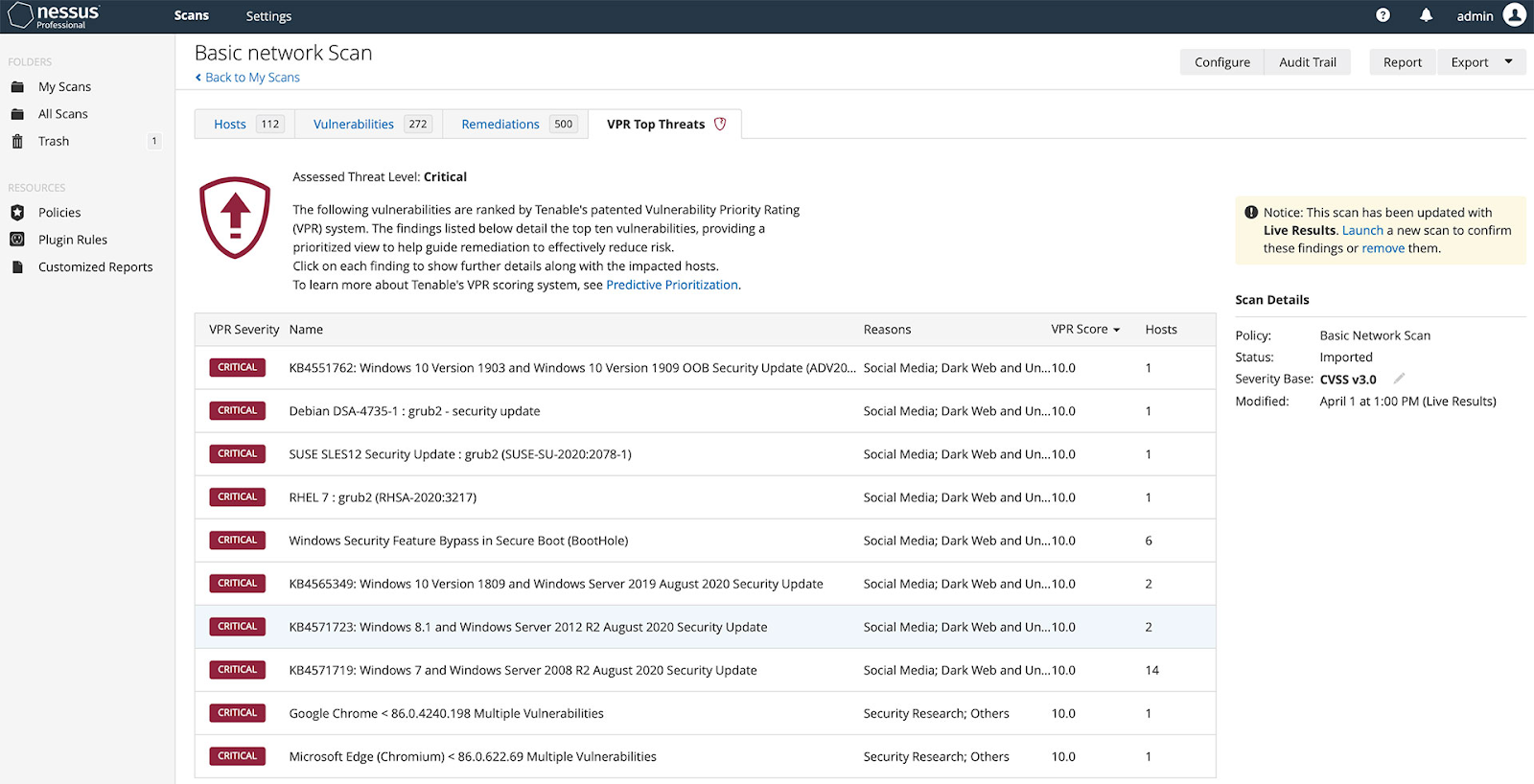
Nessus is a popular network vulnerability assessment tool. It provides features designed to help you identify, assess, and rectify security vulnerabilities. Nessus offers tools for vulnerability scanning, configuration auditing, asset profiling, and more. It is known for its speed, accuracy, and thoroughness in scanning networks.

Source: Nessus

Nessus’s provides a comprehensive vulnerability database, frequent updates, and easy-to-use interface. Its ability to scan a wide range of devices, including network devices, databases, and web servers, makes it a versatile tool suitable for organizations of all sizes. Moreover, its extensive reporting capabilities enable you to understand your vulnerabilities in-depth and plan your mitigation strategies accordingly.

3. Qualys

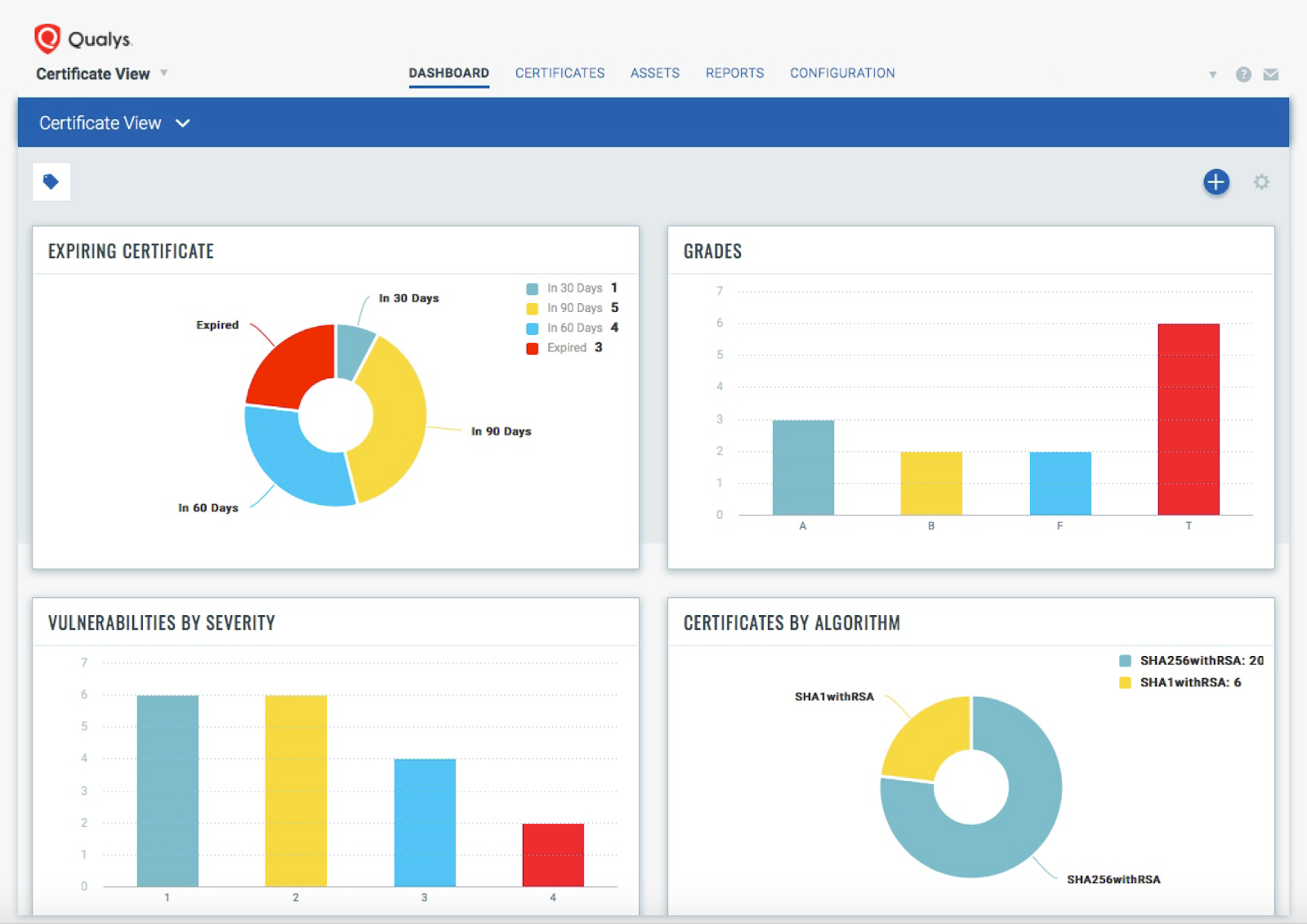
Qualys is a cloud-based network vulnerability assessment tool. Its primary function is to identify vulnerabilities in your network and provide recommendations for their remediation. Qualys offers speed, scalability, and accuracy in its vulnerability scans.

Source: Qualys

Qualys’s cloud-based nature allows it to perform scans without the need for any hardware or software installations. This scalability makes it suitable for both small businesses and large enterprises. Furthermore, its real-time threat updates ensure that you are always aware of the latest vulnerabilities.

4. OpenVAS

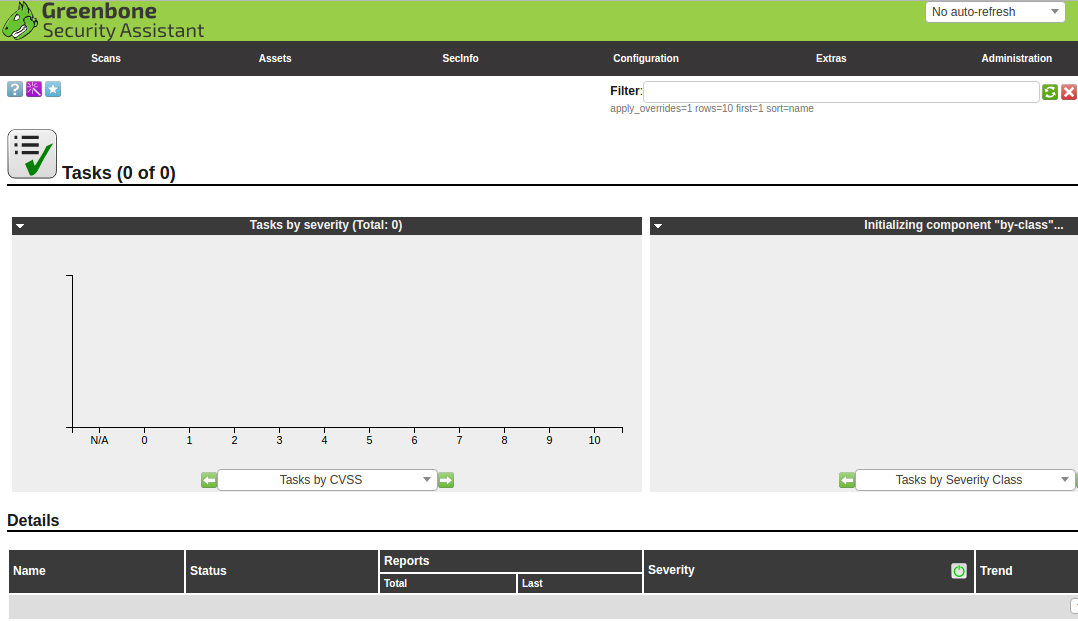
OpenVAS is a free and open-source application vulnerability assessment tool. It offers a suite of tools for vulnerability scanning, management, and reporting.

Source: Wikimedia

OpenVAS’s strength lies in its vibrant community of users and developers, who continually work on improving the tool and keeping it updated with the latest threat intelligence. Its range of plugins allows for customization according to your specific needs. Additionally, its detailed reporting capabilities help you understand your vulnerabilities and devise effective mitigation strategies.

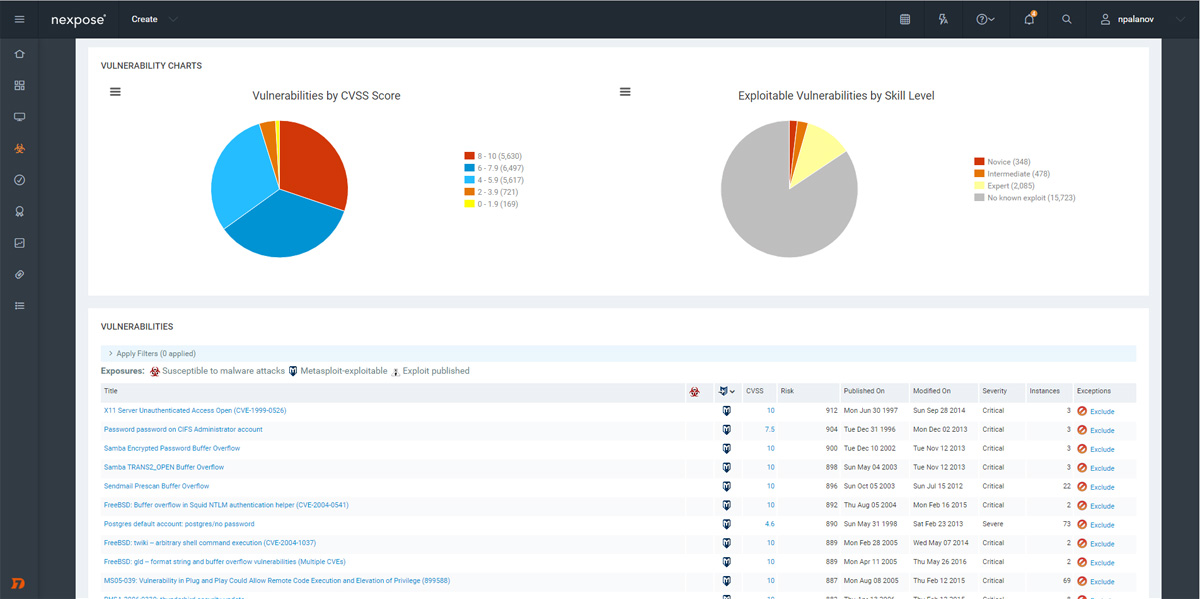
5. Nexpose

Nexpose, developed by Rapid7, is a network vulnerability management tool that offers real-time insights into your security posture. It is known for its dynamic risk scoring, which evaluates vulnerabilities in the context of their potential impact on your business.

Source: Rapid7

Dynamic risk scoring helps you prioritize your efforts based on the potential damage a vulnerability could cause. This context-based approach allows for more effective vulnerability management. Moreover, its integration capabilities with other security tools further enhance its effectiveness as a comprehensive security solution.

Conclusion

In conclusion, vulnerability assessment tools are indispensable in the cybersecurity arsenal of any organization. These tools scan, detect, and assess potential vulnerabilities in a system’s network, applications, databases, and endpoints. They offer vital capabilities such as automated scanning, threat assessment, detailed reporting, and integration with other security tools. 

Implementing and regularly using vulnerability testing tools can significantly bolster an organization’s cybersecurity posture, enabling them to identify and address vulnerabilities proactively, ultimately helping them stay ahead of evolving cyber threats. As cybersecurity continues to be a paramount concern for any organization, the importance and relevance of vulnerability assessment tools continues to grow.